Septic and well due diligence for a property
Septic and well due diligence before buying a Vermont property requires separate checks of condition, authorized use, water quality and supply performance. Start before the inspection deadline. Obtain the wastewater permit, amendments, approved bedroom count, well completion report and available maintenance records, then agree with the evaluators what can be examined and which limitations will remain.
A pump-out alone is not a complete inspection. Have the septic evaluator document accessible components and observed field conditions; arrange the water tests recommended for the supply and establish whether the well can meet the proposed demand. Compare records with the actual building.
A functioning system during a walkthrough does not establish permitted capacity or exclude an intermittent fault, and a clear-looking glass of water does not establish drinking-water quality. Review findings with the relevant professionals and resolve contract decisions within the agreed contingency period.
| Check | What it involves |
|---|---|
| Full septic inspection | Tank, baffles, filter, distribution box and field condition. |
| Wastewater permit search | Compare permitted design flow and use; construction records and condition assessment answer separate questions. |
| Comprehensive well water test | Use Health’s recommended private-water package and select radon, PFAS or other tests for the source and circumstances. |
| Well mechanical assessment | Pump age, pressure tank condition, any yield history. |
| Direct seller questions | Maintenance history, past repairs, known issues with either system. |
| Adequate inspection contingency time | Enough to complete the full checklist, not a rushed version. |
Standard due diligence items for a Vermont property purchase involving a private septic system and well.
The septic side of due diligence
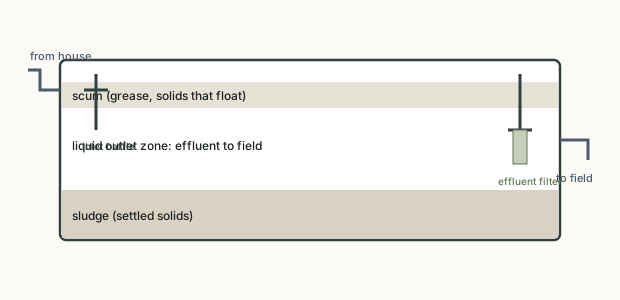
A full septic inspection, not just a pump-out, evaluates the tank's condition, baffle integrity, effluent filter presence, distribution box function, and critically, whether the drain field shows any signs of stress or failure, so the evaluator can distinguish a component defect from treatment-area failure.
Confirming the wastewater permit on file matches the home's current bedroom count catches a specific, common issue. A system sized for a smaller original house, or one that never had its permit updated after a bedroom-adding renovation, can be a real compliance and capacity problem inherited at closing if not caught beforehand.
The well and water side of due diligence
A comprehensive water quality test, covering not just bacteria but Vermont-specific concerns like arsenic, uranium and radon from local bedrock, tells you the water's actual safety and quality. None of these contaminants have any taste or visible sign. Only a test tells you before you're drinking it daily.
The well's working condition matters too: pump age, pressure tank condition, any history of low yield or dry periods. Ask the seller directly.
Bring in a professional assessment where it is warranted. Together they round out the picture of what you're inheriting beyond just water quality.
Why timing and thoroughness both matter
Most purchase contracts include an inspection contingency period specifically meant for this kind of due diligence, and rushing through a partial version of this checklist under time pressure defeats the purpose. Findings discovered during this period give you real negotiating position that evaporates once the contract's contingencies expire or closing occurs.
Request available records without inferring the seller’s motives. Agree on access and testing. Compare proposals for the actual inspection scope, laboratory analyses and follow-up; an unsupported generic budget does not establish the cost for this property.
Buying land in Vermont
Buying land in Vermont: buying raw, undeveloped land in Vermont requires a fundamentally different kind of due diligence than buying an existing house, since there's no existing septic system or well to inspect. Instead, the critical question is whether the land can support a septic system and well at all, and what size house that combination can realistically accommodate. A licensed designer’s site evaluation before purchase, with contract access arranged, establishes whether the soil can support a conventional field, needs a costlier engineered system like a mound, or in the worst case can't support a septic system at all.
That finding alone can make an otherwise appealing parcel unbuildable. Researching well yield expectations for the area, since this varies by geology, and confirming a buildable area satisfying setbacks between well, septic, property lines and water features rounds out the evaluation.
Why raw land due diligence is fundamentally different
With an existing house, due diligence evaluates a system that already exists and can be directly inspected. With raw land, there's nothing to inspect yet. The question shifts entirely to whether the land can support what you'd need to build, which requires actual soil testing rather than any amount of visual assessment or research.
This distinction matters enormously for how you structure a purchase: an existing home's septic problems are fixable at some cost, while land that cannot support any viable septic system is a fundamentally different, potentially deal-ending situation that testing needs to reveal before you're committed to the purchase.
Making soil testing a purchase contingency
The single most protective step is making your purchase offer contingent on satisfactory site and soil evaluation results. Have your attorney write the access, testing, deadlines and remedies into the actual contract. A generic suggestion to add a contingency does not establish a right to cancel or renegotiate.
This requires coordinating with the seller to allow testing before closing, which is a standard and reasonable request for raw land in Vermont, given how directly septic feasibility determines whether the land can be used for its apparent intended purpose.
Well yield and overall buildability
Well yield, how much water a drilled well in that specific area can reliably produce, varies by local geology and is worth researching through local drillers' experience with nearby properties, since a parcel in an area known for low-yield wells may need special consideration for water storage or usage planning.
Confirming a legally accessible, adequately sized building area that satisfies all required setbacks between a proposed well, septic system, property lines and any water features ties everything together. A parcel might pass soil testing but still lack enough usable, correctly configured space to fit a compliant well-and-septic layout alongside a house.
Do I need soil testing before buying raw land in Vermont?
Yes, strongly recommended. Soil testing determines whether the land can support a conventional septic system, needs a more expensive engineered system, or can't support one at all.
How do I find out well yield expectations for a specific area of Vermont?
Local well drillers with experience in that specific area can give you a realistic sense of typical yield and depth requirements based on nearby properties they've drilled.
Does a raw land parcel need a certain minimum size to support a septic system and well?
Soil conditions and required setback distances decide it, not a fixed minimum acreage. A smaller parcel with excellent soil can sometimes work where a larger parcel with poor soil struggles.
How much does soil testing cost before buying land?
Ask for the designer’s actual site-evaluation scope and price. It's bundled into a designer's site evaluation fee, a modest cost relative to the risk of buying land that turns out to be unbuildable for its intended purpose.
Can I negotiate the price of raw land based on soil testing results?
Yes. This is a common and legitimate use of testing findings, particularly if results show a need for a more expensive engineered system than a conventional field would have required.
Should I hire a septic designer before making an offer on land?
It's worth arranging testing as a contract contingency rather than before an offer, since you need seller cooperation to access the land. Structure the contingency into your offer itself.
Can I build a house on Vermont land with no septic feasibility at all?
Only with an alternative system if one is technically and financially viable, or a connection to municipal sewer if available nearby. Otherwise, land with no septic feasibility cannot support standard residential construction.
Does raw land due diligence differ from due diligence on land with an existing house?
Yes significantly. With raw land, request the site evaluation, proposed design and permit status before relying on wastewater or water-supply feasibility.
How long does soil testing take when buying land?
The test itself takes hours to a day once scheduled, though coordinating access and getting a designer scheduled can add time. Build this into your contract's contingency period timeline.
Is it worth buying land without soil testing if the price is very good?
Buying without testing is a real risk. A low price does not establish either suitability or a seller’s knowledge. Obtain the required site findings and resolve the intended use before relying on the parcel for construction.
| Item | Explanation |
|---|---|
| Make the purchase contingent on soil testing | Have the purchase agreement address soil/water feasibility, access for evaluation and the consequences of an unsuitable result. |
| Complete percolation testing and soil evaluation | Evaluate the proposed treatment and replacement areas under the applicable site criteria; a single test result is not a complete buildability decision. |
| Research local well yield expectations | Varies by geology; ask local drillers about the area. |
| Confirm a buildable area satisfying all setbacks | Well, septic, property lines and water features together. |
| Understand worst-case outcomes before buying | Know what happens if testing reveals real limitations. |
Standard pre-purchase due diligence steps for undeveloped Vermont land intended for building.
Septic and well due diligence for a property: condition reports and purchase decisions
How much does full septic and well due diligence cost?+
A few hundred to low thousand dollars combined for inspection and comprehensive water testing. That is a small fraction of the risk it protects against, given how expensive either system is to fix or replace.
How long does septic and well due diligence take?+
Inspection results are often available within days, while comprehensive water testing can take one to two weeks. Build enough time into your purchase contract's inspection contingency to accommodate both.
Can I skip due diligence if the house looks well maintained?+
No. A septic system's and well's condition are invisible during a normal walkthrough regardless of how well-maintained the visible house appears, so appearance alone tells you nothing reliable about either system.
Can I use due diligence findings to negotiate the purchase price?+
Yes, that happens often. It is one of the more common outcomes of a complete review, particularly when the field shows real stress or the water test turns up a treatable but genuine contamination issue worth pricing into the deal.
What happens if I discover a septic or well problem after closing?+
Preserve the records and consult your attorney about the contract, disclosures and circumstances. Remedies cannot be determined merely from whether an inspection occurred before closing.
Does a general home inspection cover septic and well systems adequately?+
Not in the depth dedicated septic and water testing provide. A general inspector may note visible surface issues but doesn't open the tank or run comprehensive water quality testing.
Who pays for septic and well due diligence when buying a house?+
Customarily the buyer pays, as part of their own due diligence during the inspection period. That is the same way a general home inspection is handled in most Vermont transactions.
Is due diligence different for a seasonal camp versus a year-round home?+
The same core checklist applies, though a seasonal camp's septic system may have been sized under different use assumptions, and well yield during off-season periods is worth asking about specifically.
Can I do septic and well due diligence myself without hiring professionals?+
The technical evaluation needs an appropriate professional scope. Opening and assessing a septic tank, and lab-testing water quality, both require professional equipment and expertise a homeowner doesn't have access to.