Septic inspections
Septic inspections: a septic inspection is a professional evaluation of a system's condition, the tank, the baffles and filter, the distribution box, and the drain field, meant to catch problems before they become expensive failures or, in a real estate transaction, before a buyer inherits someone else's neglected system. A complete inspection includes opening the tank, measuring sludge and scum levels, checking baffles for corrosion or damage, confirming the effluent filter is present and clean, verifying the distribution box distributes evenly, and examining the field for signs of saturation or failure.
Most Vermont inspections happen around a sale, where they protect both buyer and seller by establishing the system's actual condition instead of leaving it to guesswork, but a routine inspection every few years is also reasonable ongoing maintenance for any homeowner. What an inspection finds ranges from nothing, a healthy system, to a minor fix like a missing filter, up to a failed field that changes the economics of a sale.
| Check | What it involves |
|---|---|
| Open the tank, measure sludge and scum | Establishes whether the tank is overdue for pumping. |
| Check inlet and outlet baffles | Looks for corrosion, cracks or displacement below the liquid surface. |
| Inspect the effluent filter | Confirms it's present, clean, and functioning. |
| Check the distribution box | Level and even flow at every outlet. |
| Walk the drain field | Looks for wet ground, odor, or signs of surfacing effluent. |
| Review permit and design records | Compare approved records with accessible installed features; state any concealed or unverified work. |
Define the contracted inspection scope and inaccessible components; EPA care guidance supports service records and measurements.
What a complete inspection covers
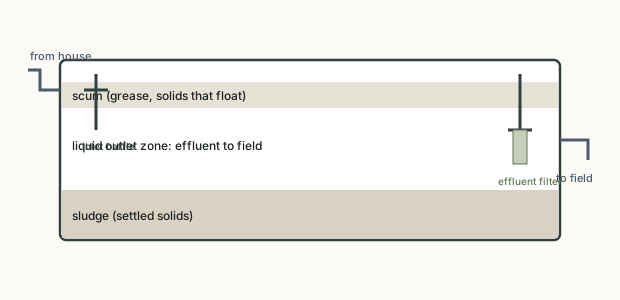
The tank gets opened, sludge and scum are measured, and baffles are checked for corrosion, cracks or displacement. The effluent filter, if present, is inspected and cleaned. The distribution box is opened, checked for level, and observed for even flow among its outlets, since an unlevel or clogged d-box quietly overloads part of the field.
The drain field area is walked and examined for wet or spongy ground, unusually lush vegetation, odor, or any visible surfacing effluent. The outdoor signs that indicate a field under stress. A complete inspector also reviews any available permit or design records against the system found on-site, to confirm it matches what was approved.
The two main reasons people get one
Real estate transactions are the most common trigger. In Vermont, a septic inspection at sale protects the buyer from inheriting a hidden failure and protects the seller by establishing the system's documented condition at the time of sale, which matters if a dispute arises later.
The other reason is routine reassurance: a homeowner who has owned a system for years without records, or who is planning a major addition or landscaping project near the system, benefits from knowing its actual condition instead of assuming it is fine since nothing has gone visibly wrong yet.
What happens with the findings
A clean inspection with a well-maintained tank, working filter and no field stress signs gives real confidence, whether for a homeowner's own planning or a buyer's reassurance. Minor findings, a missing filter, a baffle needing repair, an overdue pump-out, are inexpensive fixes that can be handled before or shortly after a sale closes.
A field showing genuine signs of failure is the outcome that changes plans the most: in a sale, it becomes a negotiation point about who pays for eventual replacement, and for an existing owner it means starting to plan and budget for that work instead of waiting for a full failure to force the issue.
What the inspector checks
Request a report organized by tank, baffles, filter, distribution box and drain field. The tank visit should record sludge and scum depth and visible structural defects.
The field walk looks for wet ground, sewage odor and surfacing effluent. Compare the installed system and bedroom count with the permit. The report should separate a repairable component defect from evidence of field failure and identify any part that could not be accessed or tested.
Ask for component findings in the inspection report
What a septic inspector checks . An inspection scope can work through the system methodically: locating and opening the tank, measuring the sludge and scum layers to establish how full it is, examining the inlet and outlet baffles for corrosion or damage, inspecting the effluent filter if present, with cleaning identified in the service scope, checking the distribution box for level and even flow at each outlet, and walking the field area looking for wet ground, odor, unusual vegetation growth or surfacing effluent. Along the way, a good inspector reviews any available permit or design paperwork to confirm the tank size and system type on record match what is installed, and asks about maintenance history, past problems, and current bedroom count relative to when the system was designed.
The visit ends with a written report listing findings by component, distinguishing genuine failures from minor repair items, and giving both parties something concrete to reference instead of a verbal impression that is easy to dispute later.
The inspection starts with finding the tank, either quickly through risers or by locating and digging up buried lids, and opening each compartment. Sludge and scum depths are measured, which establishes both whether the tank is due for pumping and, over time, gives useful data about the household's actual accumulation rate.
While the tank is open, the inspector examines the interior structure for cracks, corrosion or any sign the tank has lost its watertight integrity, since a compromised tank is one of the more serious findings possible.
Baffles at the inlet and outlet are checked for corrosion, damage or displacement. Since they sit below the liquid surface, this can only be assessed with the tank open. Ask whether the visit includes pulling, inspecting and cleaning the effluent filter, if present.
Where the agreed scope and safe access allow it, the distribution box downstream is opened, checked for level, and observed for whether each outlet is receiving a reasonably even share of flow, since an unlevel or clogged d-box is a common and often overlooked source of premature field wear.
The final major step is walking the entire field area on foot, looking for the outdoor signs of field stress : wet or spongy ground, sewage odor, unusually lush vegetation, or any visible surfacing effluent. Record inaccessible or obscured areas as limitations, because an inspection report should not imply that hidden field conditions were observed.
The inspector then documents everything in a written report, organized by component, with findings clearly separated between genuine failures and minor repair items. This report is what gives a homeowner or a real estate transaction something concrete and specific to act on, rather than a vague verbal summary.
Locates and opens the tank. Quickly if it has risers, more slowly if the lids are buried and need to be dug up or probed for first.
What a septic inspector checks: service details and questions
A complete septic inspector works through the system methodically: locating and opening the tank, measuring the sludge and scum layers to establish how full it is, examining the inlet and outlet baffles for corrosion or damage, inspecting and cleaning the effluent filter if present, checking the distribution box for level and even flow at each outlet, and walking the field area looking for wet ground, odor, unusual vegetation growth or surfacing effluent. Along the way, a good inspector reviews any available permit or design paperwork to confirm the tank size and system type on record match what is installed, and asks about maintenance history, past problems, and current bedroom count relative to when the system was designed
An inspector works down this path from the house to the field
A septic inspection, step by step
1. Locate and open the tank
Quick with risers; otherwise located and dug up
2. Measure sludge and scum
Establishes pumping need and accumulation rate
4. Inspect the effluent filter
Pulled, inspected and cleaned
5. Check the distribution box
6. Walk the drain field
Looking for wet ground, odor, vegetation or surfacing
7. Review records and write the report
Findings organized by component, failures separated from repairs
The standard sequence a complete Vermont septic inspector follows on a residential visit
Locating, opening and measuring the tank
Checking the components that control flow
Baffles at the inlet and outlet are checked for corrosion, damage or displacement. Since they sit below the liquid surface, this can only be assessed with the tank open. The effluent filter, if present, is pulled, inspected and cleaned as part of the visit
The distribution box downstream is opened next, checked for level, and observed for whether each outlet is receiving a reasonably even share of flow, since an unlevel or clogged d-box is a common and often overlooked source of premature field wear
Walking the field and writing it up
The final major step is walking the entire field area on foot, looking for the outdoor signs of field stress : wet or spongy ground, sewage odor, unusually lush vegetation, or any visible surfacing effluent. This step cannot be skipped or shortened, since the field's condition is the single most consequential factor in the whole evaluation
What is the first thing a septic inspector does?
Does a septic inspector check the well too?
It's outside the scope of the septic evaluation itself. The well's water quality is checked through a distinct test that many Vermont transactions order at the same time, as its own line item
How does an inspector check the drain field without digging it up?
By walking the surface and looking for indirect signs, wet or spongy ground, unusual vegetation, odor, or surfacing effluent, since the field's internal condition is inferred from these outdoor indicators instead of direct excavation
Does the inspector clean the effluent filter during the visit?
Yes, if one is present. Cleaning it while the tank is already open is standard practice and part of what makes combining an inspection with a pump-out efficient
What paperwork does a septic inspector review?
Any available wastewater permit or design record, checking that the tank size and system type match what's installed and comparing the design's bedroom count against the home's current count
How detailed is a typical septic inspection report?
A complete report lists findings by component, tank, baffles, filter, distribution box, field, distinguishing genuine failures from minor repair items, giving a clear written reference instead of a verbal summary alone
Can an inspector tell how old the septic system is?
Sometimes, from permit records or visible construction details, though exact age isn't always determinable without documentation. Condition matters more to the findings than a precise age figure would
Does the inspector check for tree roots near the system?
Yes, as part of walking the field and examining visible pipe or tank access, an inspector notes tree and large shrub proximity that could pose a future root intrusion risk
What if the inspector can't access part of the system?
They'll note it in the report as a limitation. Buried, inaccessible lids or an obstructed field area may mean a fuller evaluation requires follow-up work, like installing risers first
How does an inspector check if the distribution box is level?
By opening it and visually or physically checking, sometimes with a level tool, whether one outlet sits lower than the others, which would send it a disproportionate share of flow
Do inspectors take photos during a septic inspection?
Many do, as documentation for the report, particularly of any findings, a cracked baffle, a wet field area, a clogged filter, since photos give a buyer, seller or homeowner clear evidence to reference
How soon after the inspection do I get the report?
This varies by inspector. A written report is provided within a few days, especially important in a real estate transaction where contingency deadlines are often time-sensitive
Selling a home with a septic system: service details and questions
Selling a home with a septic system: selling a Vermont home with a septic system comes with obligations beyond a house connected to municipal sewer: Vermont law requires sellers to disclose known material defects, which includes known septic problems, and buyers routinely order their own inspection during the contract's contingency period regardless of what a seller discloses. The single most effective thing a seller can do is get ahead of the process. Pumping the tank if due, gathering permit and maintenance records, and considering a pre-listing inspection so you know what a buyer's inspector is likely to find before they find it.
A seller who discovers a problem this way can fix it on their own timeline and budget, market the home with a disclosed and priced-in issue, or address it in negotiations. All better positions than being surprised by a buyer's report mid-contract with a closing deadline already set
A seller who knows where each part sits answers buyer questions faster
Getting a septic system sale-ready in Vermont
Removes an easy, avoidable finding from a buyer's inspection
Know what a buyer will find before they find it
Vermont law requires disclosing known material defects
A common mismatch that surprises both parties late in a sale
Vermont's property disclosure requirements obligate a seller to disclose known material defects, and a septic system problem you are aware of, a failing field , a known baffle issue, a system undersized for the current bedroom count, falls into that category. Concealing a known issue creates real legal exposure if it surfaces after closing
Gather your pumping records, any repair history, and the original wastewater permit if you have it. These documents answer many of a buyer's inspector's questions before they even ask, and they signal a well-maintained system, which buyers and their agents notice
If your tank is due or overdue for pumping, do it before listing rather than letting a buyer's inspection reveal an overdue tank as a finding. It's a small, controllable cost that removes an easy objection from the process entirely
Do I have to disclose septic problems when selling in Vermont?
Yes. Vermont's disclosure requirements obligate sellers to disclose known material defects, which includes a known septic system problem such as a failing field or an undersized tank
Should I get a septic inspection before listing my house?
It's strongly worth considering. A pre-listing inspection lets you find and address any issues on your own timeline, instead of being surprised by a buyer's inspection mid-contract with a closing deadline set
Yes. It's a small, controllable cost that removes an easy, common finding from a buyer's inspection report, and it lets the inspector assess the tank's true condition without an overdue-pumping distraction
Pumping receipts, any repair history, and the original wastewater permit if available. These documents answer many of a buyer's inspector's questions upfront and demonstrate a well-maintained system
How does an undersized septic tank affect selling my house?
If the tank doesn't match the current bedroom count, it's a common and meaningful finding that can complicate a sale. Confirming this before listing lets you address or disclose it proactively instead of reactively
Septic inspection when buying a house
A septic inspection when buying a house in Vermont checks the tank, distribution and field conditions that a normal walkthrough cannot reveal. Arrange a separate septic assessment. The tank, baffles, distribution and treatment area can have defects without obvious indoor symptoms.
A general home inspection does not establish their condition. A pre-purchase inspection establishes the system's actual condition, whether the tank is correctly sized for the bedroom count, whether it has been maintained, and whether the field shows any stress, and gives you room to negotiate a price adjustment, a seller-funded repair, or in some cases walk away from a system that would need replacement soon after closing.
Given a full field replacement commonly costs into five figures, the inspection's cost is a small fraction of the risk it protects against. Keep the findings with the purchase records.
Why it matters more here than almost anywhere else
Municipal sewer still leaves a buyer responsible for the private lateral under the local ordinance. Septic adds a tank and treatment area on the property to that inspection task. A septic system is the opposite: its entire condition depends on how the previous owner maintained it, and that history is invisible unless someone opens the tank and checks.
This asymmetry is exactly why an inspection has outsized value on a septic property. You are not just checking a box. You are uncovering information about the single most expensive hidden system on the property, one that a home inspector's general walkthrough does not evaluate in the same depth.
What it reveals that you cannot see otherwise
An inspection tells you whether the tank matches the house's bedroom count, since a system sized for a smaller previous configuration or an added bedroom without an upgrade is a real and common issue. It tells you whether the baffles and filter are intact, whether the tank has clearly been pumped on a reasonable schedule, and whether the distribution box is level and functioning.
Most importantly, it tells you whether the drain field, the part that cannot be repaired if it has failed, shows any signs of stress. That single finding can be the difference between a routine purchase and one that needs a renegotiated price to account for a replacement you would otherwise inherit within a year or two.
Using the findings
A clean inspection is straightforward confirmation and lets you move forward with confidence. Minor findings, a missing filter, a slightly overdue pump-out, a baffle needing repair, are reasonable to ask the seller to address or credit before closing, since they are inexpensive relative to the transaction as a whole.
A field showing real signs of failure is the finding that should change your approach most: request a full evaluation of expected remaining life, get a replacement estimate, and use that number directly in price negotiation or as grounds to reconsider the purchase if the seller will not adjust for it.
Is a septic inspection required to buy a house in Vermont?
Not universally required by law, but it is common practice, often requested by lenders or built into purchase contracts, and strongly recommended given how expensive a septic system is to replace and how invisible its condition is otherwise.
How much does a pre-purchase septic inspection cost?
A published Maxwell Home Inspections guide gives a $400 to $700 Vermont example. Ask for a written scope and whether the price includes pumping, locating the tank and a follow-up visit.
Who pays for a septic inspection when buying a house?
This is negotiable and varies by transaction. It is commonly the buyer's expense as part of their own due diligence, similar to a general home inspection.
What if the septic inspection finds a problem after I've made an offer?
Most purchase contracts include an inspection contingency that lets you renegotiate price, request repairs, or in some cases withdraw the offer based on findings, which is exactly why the inspection should happen early in the process.
Can I use septic inspection findings to negotiate the price?
Yes. This is one of the most common and effective uses of the findings, particularly if the field shows stress or the system needs a repair the seller had not disclosed.
Does a general home inspection cover the septic system?
Not in the depth a dedicated septic inspection provides. A general home inspector may note visible surface issues but does not open the tank or evaluate the field the way a septic specialist does.
How old does a septic system need to be before I should worry?
Age alone is less important than maintenance history and current condition. A well-maintained older system can outperform a neglected newer one, which is exactly why an inspection matters more than the system's age on paper.
Can a septic inspection be done in winter?
Yes, though frozen ground can make locating and accessing buried lids slower and sometimes more expensive. The winter pumping guide covers what changes about access in cold weather.
What happens if the septic system fails right after I buy the house?
Preserve the inspection, disclosures, permit and contract, and obtain a written diagnosis. Responsibility depends on the facts and the agreement. An inspection does not create or eliminate legal remedies by itself.
Should I get a septic inspection even if the house looks fine?
Yes. A septic system's condition is not visible from a normal walkthrough, so 'looking fine' tells you nothing about the tank, baffles, distribution box or field underground.
Does the size of the septic system need to match the number of bedrooms I'm buying?
Yes, ideally. A mismatch between the tank's design and the house's current bedroom count is a common and meaningful finding that an inspection or permit review should catch before closing.
What fails a septic inspection
What fails a septic inspection: a septic system fails an inspection when the evaluation finds active, functional problems instead of merely age or cosmetic wear. The clearest failing finding is a drain field showing surfacing effluent, standing wet ground with no other explanation, or symptoms that persist after the tank is pumped, all indicating the field can no longer treat wastewater at the rate the household needs.
Other failing findings include a cracked or structurally unsound tank that has lost its watertight seal, baffles missing or too corroded to function, and a mismatch between the installed system, permitted capacity and current use that needs a designer’s review. Findings that are serious but do not constitute an outright failure, more often noted as repair items, include a missing or clogged effluent filter, an unlevel distribution box, an overdue pump-out with no other symptoms, or lids that are buried and hard to access.
The findings that mean an actual failure
A drain field that shows active surfacing effluent, sustained wet or spongy ground with no rain to explain it, or symptoms that return within days of the tank being pumped is the clearest sign of true failure. The soil has lost its capacity to treat wastewater and cannot be repaired in place.
A structurally compromised tank, cracked, leaking, or with baffles too corroded or missing to function, also counts as a genuine failure, since it means the tank can no longer do the basic job of settling solids and holding back what should not reach the field.
Findings that are serious but just repair items
A missing or badly clogged effluent filter, an unlevel distribution box, a tank that is overdue for pumping with no other symptoms, or buried lids with no risers are all common findings that a good inspector will flag, but none of them means the system has failed. They mean it needs attention, an inexpensive one.
The practical difference matters especially in a sale: a repair item is something a seller can often address quickly and cheaply before closing, while a genuine failure changes the transaction's economics and requires either a price adjustment or a plan for replacement.
What determines the line between the two
The core question an inspector is answering is whether the system, as found, can still reliably treat and disperse the household's wastewater without risk to health or property. A tank problem that is contained to the tank itself, and repairable, does not by itself mean the field has also failed.
This is why a complete inspection separates its findings by component, tank, baffles, filter, distribution box, field, instead of issuing a single pass-or-fail verdict, since a system can have real, fixable issues in one area while remaining sound where it matters most, the field's ability to treat water.
Does a missing effluent filter fail an inspection?
Not outright. It's noted as a repair item, since installing or cleaning a filter is an inexpensive fix instead of evidence the system itself has failed.
Can an old septic tank fail inspection just for its age?
Age alone is not a failing finding. A well-maintained older tank can pass fine. Failure is based on actual condition: structural integrity, baffle function and whether it's holding up its part of the system.
Does an undersized septic tank fail inspection?
Often yes, if it is meaningfully undersized for the home's current bedroom count without a corresponding upgrade, since it means the system was not designed to handle the household's actual load.
What if my drain field shows some wet spots but no odor?
It depends on the pattern and persistence. Occasional dampness after heavy rain may be normal, while sustained wet ground with no rain explanation is a meaningful sign worth a closer evaluation.
Is an unlevel distribution box a failing finding?
Treated as a repair item rather than an outright failure, since resetting or leveling a d-box is a contained, relatively inexpensive fix that restores proper function without touching the field.
Can a septic system fail inspection even if there are no symptoms inside the house?
Yes. Outdoor signs like surfacing effluent or a persistently wet field can indicate failure even before symptoms reach the house, which is exactly why the outdoor walk-through matters as much as checking the tank.
What happens after a septic system fails inspection during a home sale?
It becomes a significant negotiation point. The buyer may request a price reduction, a seller-funded repair or replacement plan, or in some cases choose to withdraw depending on the contract's contingencies.
Can a system that failed inspection be brought back into compliance?
A tank problem is often repairable. Have the defect and extent established before choosing an approved repair or replacement. A symptom alone cannot decide recoverability, and pumping does not repair every field fault.
Does Vermont have an official pass/fail standard for septic inspections?
There is no single statewide mandatory checklist for private resale inspections, so findings and terminology can vary between inspectors. Asking what standard or checklist your inspector uses is a reasonable question.
How do I know if a repair item will get worse if I ignore it?
Ask the inspector directly. Some repair items, like a missing filter, pose real long-term risk to the field if left unaddressed, while others are more cosmetic. A good inspector will tell you which is which.
Who pays for a septic inspection
Who pays for a septic inspection: in most Vermont real estate transactions, the buyer pays for the septic inspection, ordering it as part of their own due diligence during the inspection period, similar to how they pay for a general home inspection. This is a custom instead of a strict rule, though, and the specific arrangement is negotiable and sometimes spelled out in the purchase contract. A seller who wants to demonstrate confidence in the system, or one selling in a competitive market, will sometimes order and pay for the inspection themselves before listing.
A published Vermont inspection guide from Maxwell Home Inspections gives a $400 to $700 example; the price for your property depends on the stated scope, access and whether pumping is included. Outside a real estate transaction, a homeowner ordering a routine inspection simply pays for it directly as part of ongoing system maintenance, at about the same price range as a buyer's pre-purchase inspection.
The typical arrangement in a real estate sale
Buyer-paid is the default in most Vermont transactions. The inspection is fundamentally serving the buyer's due diligence.
Confirming what they are about to own works as represented. It is ordered during the inspection contingency period specified in the purchase contract, alongside or shortly after the general home inspection.
Some sellers choose to get ahead of this by ordering their own inspection before listing, particularly if they know the system is in good condition and want that as a selling point, or if they suspect an issue and would rather address it on their own timeline than have it surface during a buyer's contingency period.
What determines the price
Whether the inspection is combined with a pump-out matters most, since opening and emptying the tank is required either way, and doing both in one visit is more efficient than two separate appointments. Tank accessibility, whether it has risers or needs to be located and dug up, adds cost when access is difficult.
Regional pricing varies modestly across Vermont, with more remote areas sometimes costing more due to travel time for the inspector. The complexity of the system itself, a straightforward conventional field versus a mound system with a pump to check, can also affect price slightly.
When the arrangement changes through negotiation
If an initial inspection finds a problem and further evaluation is needed, say, assessing a field's remaining life more precisely, who pays for that follow-up work often becomes part of the broader negotiation, sometimes split or assigned based on who is asking for the additional confidence.
Outside of a sale, the question is simpler: whoever wants the inspection, whether a homeowner checking on an aging system or someone planning a major addition near the septic area, pays for it directly as a normal maintenance or planning expense.
Does a septic inspection cost more than a pump-out alone?
It's similar to or more than a standalone pump-out, since the inspection adds an evaluation on top of the same tank-opening work, and many providers price the combination as one visit.
Is it worth paying extra for a septic inspection instead of just a pump-out?
Yes, especially before a purchase. A pump-out alone doesn't evaluate baffles, the distribution box or the field, all of which an inspection covers and which matter far more to the system's remaining life.
Why would a seller pay for their own septic inspection?
To demonstrate confidence in the system as a selling point, or to address any issues on their own timeline before a buyer's contingency period puts them under time pressure to negotiate quickly.
Does homeowners insurance ever cover a septic inspection?
Rarely. A septic inspection is a maintenance and due-diligence expense, not a covered peril under a standard homeowner's policy. It is an out-of-pocket cost.
How much does it cost if the tank has to be located first?
Locating an unmarked or buried tank adds cost beyond the base inspection price, since it requires extra time and sometimes specialized equipment before the actual evaluation can even begin.
Do inspection costs vary across different parts of Vermont?
A little. More remote areas can see modestly higher prices due to inspector travel time, though the core cost structure of the inspection itself is consistent statewide.
Should I get multiple quotes for a septic inspection?
It's reasonable, particularly for a standalone inspection outside a time-pressured real estate transaction, since pricing and what's included in the visit can vary between providers.
What's included in the price of a typical inspection?
Locating and opening the tank, measuring sludge and scum, checking baffles and the filter, evaluating the distribution box, and walking the field area. Confirm the specific scope with your provider before booking.
Is a follow-up field evaluation an extra cost beyond the initial inspection?
Often yes, if the initial inspection flags a concern that needs more detailed assessment. This additional cost is sometimes part of transaction negotiation over who requested and benefits from the added confidence.
What a septic inspector checks
What a septic inspector checks depends on the purpose and agreed inspection scope: records, accessible components, observed operating conditions and the limits of what could be evaluated. For a purchase, ask for a written scope before the visit, including which tank openings, pumps, alarms, distribution components and disposal-area observations are covered. Give the inspector the wastewater permit, design drawing and service history.
A tank-only look cannot establish the condition of every buried field line, and a recently pumped tank can remove evidence the inspector wanted to observe. Coordinate pumping with the inspection company.
The report should separate measured findings, inaccessible items and recommendations for further investigation. Use that distinction to evaluate a repair quote instead of treating a brief invoice or an unexplained pass/fail label as a complete system assessment.
What the septic inspector checks for a purchase
An owner seeking an alarm diagnosis may need different work from a buyer assessing the entire permitted installation. Ask whether the quote includes a records comparison and any operating tests appropriate to the components.
State whether the building is occupied and whether water service is available. Those conditions affect what the inspector can observe during the appointment.
Read limitations alongside the findings
Look for the location of each inspected component and an explanation of anything not accessed. A recommendation to expose a distribution box is different from a documented defect at that box. Request photographs and measurements supporting repair recommendations, then have the appropriately qualified professional define the remedial scope and any required authorization.
Selling a home with a septic system
Selling a home with a septic system: selling a Vermont home with a septic system comes with obligations beyond a house connected to municipal sewer: known septic problems should be documented with the seller’s agent and attorney before marketing, and buyers routinely order their own inspection during the contract's contingency period regardless of what a seller discloses. Gather records and allow time for the agreed assessments before closing. Coordinating due pumping with the inspector, gathering permit and maintenance records, and considering a pre-listing inspection so you know what a buyer's inspector is likely to find before they find it.
A seller who discovers a problem this way can fix it on their own timeline and budget, market the home with a disclosed and priced-in issue, or address it in negotiations. All better positions than being surprised by a buyer's report mid-contract with a closing deadline already set.
Your disclosure obligation
Vermont’s real-estate licensing law requires a licensee to disclose material facts within their knowledge. Give the listing agent and attorney any septic failure report, repair history or known mismatch between the permitted and current use so the disclosures and contract address the actual issue. Concealing a known issue creates real legal exposure if it surfaces after closing.
This does not mean you need to proactively investigate for problems you have no reason to suspect, but it does mean that once you know something, disclosure is both the legally sound and practically simpler path, since a buyer's own inspection is very likely to find it anyway.
Why getting ahead of it works in your favor
A pre-listing inspection costs a modest amount relative to the transaction and gives you the same information a buyer's inspector will find, but on your own timeline instead of in the middle of a contract with a closing date looming. If it's clean, you can market it as a strength. If it finds something, you control how and when to address it.
Sellers who skip this step and let the buyer's inspection be the first real look at the system's condition often end up negotiating from a weaker position. A problem discovered mid-contract creates time pressure that tends to favor the buyer, since you are now the one needing the deal to still close on schedule.
What to have ready
Gather your pumping records, any repair history, and the original wastewater permit if you have it. Give the buyer the permit and maintenance records, identifying any gap that an inspection still needs to address.
If pumping is due, coordinate its timing with the inspector before emptying the tank; the inspection may need the system at its normal operating level. It's a small, controllable cost that removes an easy objection from the process entirely.
What if I don't know anything about my septic system's condition?
That's exactly the situation a pre-listing inspection is meant to resolve. You cannot disclose what you don't know, but a buyer's inspector will still find real problems. Getting ahead of it protects your negotiating position.
Can I sell a house with a failing septic system in Vermont?
Yes, though it requires disclosing the issue and results in a price adjustment, a seller-funded repair or replacement, or marketing to buyers prepared to take on that project themselves.
Does pumping the tank before listing really make a difference?
Coordinate with the inspector before pumping. They may need to observe operating levels first and then examine the emptied tank. Supply the service records and follow the inspection sequence they specify.
What septic records should I gather before selling?
Pumping receipts, any repair history, and the original wastewater permit if available. Records show documented work; they do not establish the present condition of inaccessible components.
Can a buyer back out of a sale because of septic problems?
Yes, through an inspection contingency in the purchase contract, which is exactly why addressing known issues before listing, or being prepared to negotiate on found issues, protects the deal from falling through.
Is a septic system a selling point or a liability?
It can be either. A well-documented, recently serviced system with clean records is a legitimate selling point, while an undocumented or poorly maintained one is a liability that a buyer's inspection will likely surface.
What happens if I sell without disclosing a known septic issue?
You risk legal exposure if the issue surfaces after closing and can be traced to something you knew and didn't disclose. Full disclosure is both the legally sound and practically simpler approach.
Does a septic inspection expire before closing?
There's no fixed universal expiration, but a report done many months before closing may not reflect the current condition, especially if maintenance lapses in the interim. Timing it reasonably close to the sale is sensible.
Should I offer to split septic repair costs with a buyer?
It's a common and often practical negotiation outcome, particularly for a moderate repair item instead of a full field replacement. It keeps the deal moving while sharing the cost of addressing the finding.
| Item | Explanation |
|---|---|
| Tank sized to current bedroom count | Compare proposed use and permitted design flow; tank capacity alone does not approve the whole system. |
| Baffles and filter intact | Missing or corroded baffles let solids bypass settling. |
| Recent pump-out history | Ask for receipts; a clear maintenance record is reassuring. |
| Distribution box level and functioning | An unlevel d-box quietly overloads part of the field. |
| No signs of field stress | Have observed field conditions and limitations documented without assuming that appearance predicts remaining life. |
| Permit on file matches the system | A permit describes approved work; construction records and field assessment help establish what was installed. |
Standard due-diligence items a septic inspection should confirm before a Vermont home purchase closes.
| Finding | Follow-up to establish |
|---|---|
| Surfacing effluent or persistent wet field | Identify water source, loading and treatment-area condition; keep people clear of suspected effluent |
| Symptoms return quickly after pumping | Needs diagnosis: outlet, distribution or field problem |
| Cracked, leaking or structurally unsound tank | Qualified evaluation of tank integrity and approved repair/replacement |
| Missing or clogged effluent filter | Assess restriction, bypass and the specified service or replacement |
| Unlevel distribution box | Assess distribution and any downstream condition before defining repair |
| Overdue pump-out, no other symptoms | Take sludge/scum measurements and set service from the findings |
| Buried lids, no risers | Define safe inspection/service access; lack of risers alone does not diagnose treatment failure |
General framework for how a Vermont septic inspection distinguishes a functional failure from a repairable finding.
| Situation | Who pays |
|---|---|
| Standard home purchase | Confirm the purchase agreement and who orders the service |
| Seller wants to pre-list with confidence | Seller authorizes the separate pre-listing scope |
| Follow-up evaluation after a concerning finding | Agree responsibility and any split before ordering |
| Routine homeowner check, no sale involved | The homeowner directly |
Contract and service-order responsibilities vary; this is a scope checklist, not a mandatory statewide allocation.
| Evidence | Question answered | Remaining limit |
|---|---|---|
| Permit and drawing | What was authorized | Whether installation matches |
| Opened tank | Visible tank condition | Buried field condition |
| Operating observation | Response during the visit | Future performance guarantee |
Inspection conclusions need to state what was accessible and what remains untested.
| Item | Explanation |
|---|---|
| Pump the tank if due | Coordinate due pumping with the inspector so relevant operating observations and measurements are recorded. |
| Gather maintenance and permit records | Answers a buyer's inspector's questions before they're asked. |
| Consider a pre-listing inspection | A defined pre-listing scope can identify findings, but cannot promise what a later assessment will establish. |
| Disclose any known issues | Give the agent and attorney the known findings for the required disclosures and contract. |
| Confirm the tank matches current bedroom count | Compare the authorized design flow and proposed use with the complete system records. |
Practical preparation steps for a seller with a septic system, reflecting Vermont disclosure norms and standard transaction practice.
Septic inspections: inspection scope and findings
How much does a septic inspection cost in Vermont?+
Maxwell Home Inspections publishes a Vermont example of $400 to $700 for a complete inspection. Confirm the scope, access charges and whether pumping is included. That provider’s range is not a statewide quote.
How long does a septic inspection take?+
One to two hours for a straightforward residential system, longer if the tank has to be located and dug up, or if the field requires a more extensive walk-through to assess.
Do I need a septic inspection to sell my house in Vermont?+
It is common practice and often requested by buyers or lenders, though requirements vary. The selling-a-home guide covers the specifics of when it's effectively required in a Vermont transaction.
Can I do my own septic inspection?+
A homeowner can watch for the outdoor warning signs. A complete inspection, opening the tank, checking baffles, measuring sludge, requires professional equipment and experience to do safely and accurately.
How often should a septic system be inspected?+
Every few years is a reasonable interval for routine reassurance, in addition to any inspection tied to a sale, especially for a system with no clear maintenance history.
Is a septic inspection the same as a pump-out?+
Related but not identical. A pump-out empties the tank. An inspection evaluates the system's condition and often includes or follows a pump-out so the tank can be examined empty.
Who performs septic inspections in Vermont?+
Licensed septic system professionals, sometimes the same operators who provide pumping services, and in some cases a specialized inspector focused specifically on real estate transaction evaluations.
Can a septic inspection tell me if the field will fail soon?+
It can identify current signs of stress or early failure, but it cannot precisely predict a healthy field's remaining lifespan. It gives a snapshot of current condition, not a guaranteed timeline.
What if my septic system has never been inspected?+
It is worth arranging one, especially if you have no maintenance records. An inspection establishes a baseline condition and catches any accumulated problems before they progress further.
Does a septic inspection include testing the well water too?+
That's a separate item, ordered alongside it in many Vermont real estate transactions rather than bundled into the septic evaluation itself. The water testing guide covers what that separate test involves.