Septic inspections in winter
Septic inspections in winter are possible in Vermont, but snow and frost change the access, observations and limitations that the inspector must document; the tank inspection works in the cold once the lids are open, and a pump-out gives a clear view of the tank, baffles and filter. The drain field is the harder part. Snow covers it, and frozen soil takes in water slowly, so a dye test or a water-loading test can give a weak or misleading result.
A good inspector says plainly which parts they checked and which they could not, and buyers can still close in winter with a written limit on the inspection and a follow-up visit in spring. Sellers help by clearing the lids and the path to them before the visit, and by handing over every pump-out receipt and permit they have on file.
| Part of the system | Winter status | What helps |
|---|---|---|
| Tank and lids | Access and safe cover condition determine what can be inspected | Snow cleared, risers if present |
| Baffles and effluent filter | Checkable with the tank open | Coordinate opening and any due service with the inspector |
| Pump, alarm and controls | Subject to access, electrical safety and contracted scope | Access to the panel |
| Drain field surface | Snow can obscure surface observations | Spring follow-up visit |
| Dye or water-loading test | Only if appropriate to conditions and the contracted method | Report that names the limit |
| Permit and pump-out records | Fully checkable | Seller hands over the file |
A planning summary of how snow and frost affect a septic inspection, meant to prepare questions for an inspector. The inspector's report governs.
What still works in a winter inspection
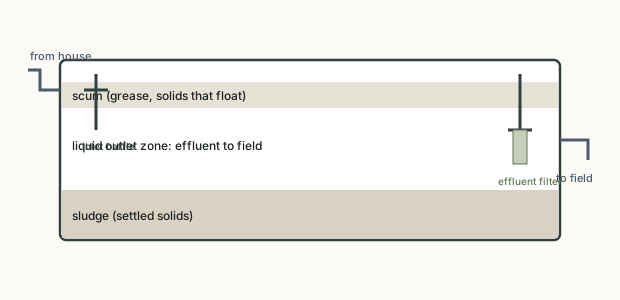
Most of the tank side of an inspection works in any weather. The inspector opens the lids, checks liquid levels, looks at the baffles and reads the condition of the effluent filter. A pump-out on the same visit makes the tank walls easy to see.
Records also work in winter. The inspector reviews the permit, the tank size and the pump-out history. That paperwork often says more about the system than a snowy yard does, and a clean file with the permit, a diagram and every pump-out receipt lets the inspector confirm the tank size, the age of the system and the care it has had before anyone picks up a shovel.
Where snow and frost limit the result
The drain field is where winter hurts. Snow hides the wet spots, lush grass and odors that show a field in trouble, and frozen soil drains slowly enough that a test adding water or dye can read as a failure or a pass for the wrong reason.
An inspector who cannot trust a test should say so in the report. Look for wording that names the limit, such as field not inspected due to snow cover. A vague pass tells you nothing.
Planning around a winter closing
A closing date does not move for the weather, and buyers who cannot wait can ask their agent or attorney about a written follow-up inspection in spring that covers the drain field once the snow is gone.
Sellers can shorten the visit. Clear the snow off the lids, keep the driveway open for the truck and gather the permit, plans and pump-out receipts. A tank that is easy to open costs less to inspect.
If the report leaves the drain field unchecked, ask the inspector in writing what a spring visit would cover and what it would cost, since a follow-up arranged before closing is far easier to set up than one requested after the keys have changed hands.
Agree on pumping before the inspection visit
Before scheduling an unrelated pump-out, ask whether the inspector needs to observe the tank at its operating level, because emptying it may expose surfaces while removing evidence about the liquid level and loading that the proposed inspection needs to evaluate. Agree on the sequence before the visit.
The report should identify inaccessible components and tests not performed. Discuss any follow-up scope and contract deadlines with the inspector and your attorney before relying on a limited winter result.
Septic inspections in winter: cold-weather limitations and later follow-up
Can a dye test be done on frozen ground?+
The test can run, but frozen soil drains slowly and the result is hard to trust. Interpret any test within its method, access and seasonal limits.
A result in either season is not a guarantee of future performance. Ask whether the inspector will stand behind it.
Does snow hide a failing drain field?+
It can. The signs an inspector looks for, such as soggy ground and lush grass, are hard to see under snow. That gap is why a spring follow-up is worth asking about.
Will the inspector dig up frozen lids?+
Sometimes, at extra cost, and sometimes not at all. Lids on risers are easy to open, and buried lids under frost are not. Confirm the plan before the visit.
Does a winter inspection cost more?+
It can. Extra time to clear snow and reach lids adds to the bill. A tank with risers keeps the price close to a summer visit.
How long does a winter inspection take?+
A clear tank with open lids goes quickly. Digging out lids or waiting on a pump-out truck adds time. Plan on a longer window than in summer.
What if the tank is under two feet of snow?+
Someone has to clear it before the inspector can start. The seller or the listing agent can arrange that. A shovel and a probe often find the lids if the location is on record.
Can the pump-out and the inspection happen on the same day?+
Yes, and many buyers prefer it. The tank is empty, so the inspector sees the walls, baffles and filter. It also saves a second truck visit.
Should a buyer wait until spring for the whole inspection?+
Waiting gives the fullest picture, and it is not always possible. A winter tank inspection plus a written spring follow-up is a common middle path. Your agent or attorney can draft the terms.
What should the report say when the field could not be checked?+
It should name the limit in plain words, such as field not inspected due to snow cover. It should also say what was checked and what was not. A report with no such note leaves you guessing.
Which records should a seller hand over?+
The original permit, the as-built drawing if there is one, tank size and every pump-out receipt. Records show how the system was designed and kept. They speed up the visit and support the sale.