Vermont septic permits
Vermont septic permits cover wastewater systems and private water supplies through the combined Wastewater System and Potable Water Supply Permit. The state's Department of Environmental Conservation administers it through regional offices, through its wastewater program, with local requirements and any delegated authority also checked for the property. The permit is required for installing a new septic system, replacing a failed one, and often for any project that changes a home's bedroom count.
Bedroom count directly drives required design capacity under the state's wastewater rules. The process starts with soil testing and a design from a licensed professional, moves through state review, and results in an approved permit specifying exactly what can be built: tank size, field size and location, setback compliance. For an existing home, especially one changing hands, finding the original permit on file is often the fastest way to confirm the system matches its design intent, which matters for maintenance planning and any future addition.
| Check | What it involves |
|---|---|
| New construction without municipal sewer | Determine which authorization or specific exemption applies to the proposed system and supply. |
| Replacing a failed septic system | Have the replacement scope reviewed under the applicable permit and rules before work. |
| Adding bedrooms to an existing home | Can trigger a review of the existing system's approved capacity. |
| Significant system modification | Changes beyond routine maintenance need permit review. |
Standard situations requiring a Wastewater System and Potable Water Supply Permit in Vermont.
Why Vermont handles this at the state level
Some states leave septic regulation primarily to the local town. Vermont doesn't. Vermont centralizes wastewater and water supply permitting at the state level through the Department of Environmental Conservation's regional offices, bringing consistency to the technical standards applied statewide, regardless of which town a property sits in. The state runs the process.
This state-level structure means the same fundamental design rules, soil testing requirements, setback distances, sizing formulas, apply whether a project is in a small rural town or a larger municipality, though individual towns can still have their own additional local requirements layered on top, particularly around driveway access permits that intersect with septic siting. Check with the town too.
What triggers the permit requirement
Identify the proposed work. Check the applicable trigger and exemption. New construction, modification and increased design flow are reviewed under the rules, while specifically defined minor repairs can qualify for exemption; replacing a tank and replacing a failed leachfield are not interchangeable scopes.
Less obviously, an addition or renovation that increases a home's bedroom count can trigger a permit requirement even if the existing septic system seems to be working fine, since Vermont's rules tie system capacity to bedroom count. Adding bedrooms without confirming or upgrading the system's permitted capacity is a common compliance gap that surfaces during a later sale or inspection.
Two specific situations come up often enough to warrant their own detail on this site: adding an accessory dwelling unit to a property, and converting a camp to year-round use, both of which the state treats as their own triggering events instead of routine maintenance. Ask before you add bedrooms.
Working with an existing permit
For an existing home, the original wastewater permit, filed with the town clerk or available through the state's regional office, is the authoritative record of what the system was designed and approved to handle, including tank size, field dimensions, and the bedroom count it was sized for. Find the original permit first.
This document is valuable well beyond the initial construction: it's the reference point for confirming a system still matches its approved design, for planning any future addition that might affect bedroom count, and for a buyer's due diligence when purchasing a property to confirm the septic system's designed capacity matches the house as it currently stands. Keep a copy with your records.
Municipal connections can also need this program’s approval
The wastewater program is not limited to private septic systems. DEC’s Municipal Connections guidance covers new or replacement service connections to municipal water and sewer mains and may include main extensions. Determine the applicable permit or exemption for the actual project.
A building permit, town access permit or utility allocation does not automatically replace wastewater authorization. Ask the designer to identify each approval and any applicable exemption before construction.
Review the application and the construction records separately
The application establishes proposed use, design flow, site evaluation and the water and wastewater layout. The issued permit and approved plans state what may be built. An approval alone does not confirm the installed system’s condition or its final configuration.
Keep amendments, installation certification and operating conditions with the plan. For an innovative-alternative pretreatment unit, DEC’s application page adds an applicant acknowledgment requirement beginning May 15, 2026; confirm that the current application includes the required documents.
Keep the approved layout and completion evidence together
The Wastewater and Potable Water Supply Permit . Vermont's Wastewater System and Potable Water Supply Permit is a single combined permit covering both a property's septic system and, where relevant, its private water supply. An approach that reflects the practical reality that septic and well design need to be considered together, since setback distances between them are a critical safety requirement instead of two separate, unrelated concerns.
The application, prepared by a licensed designer, includes soil testing and site evaluation results, the specific system design (tank size, field dimensions, layout), and confirmation that all required setback distances from wells, water bodies, property lines and structures are met. State review checks the application against Vermont's wastewater rules before issuing an approved permit, the legal authorization for construction.
Building without it, or differently than specified, carries real consequences, especially at a future sale. Other environmental and municipal approvals can still apply; have the designer identify those separately for the property.
Combining septic and water supply into one permit reflects that these two systems have a direct safety relationship. The required setback distance between a septic field and a well exists specifically to protect drinking water from contamination, so evaluating them together instead of through separate, disconnected processes makes practical sense. The well and the field are linked.
This combined approach also means a single application and review process handles both components for most residential projects, instead of requiring a homeowner or designer to navigate two entirely separate permitting tracks for closely related systems on the same property. One application covers both.
The application includes soil testing and site evaluation results establishing the ground's suitability and limitations, the specific proposed system design with exact dimensions and placement, and documentation confirming all required setback distances are satisfied by that specific design on that specific lot. Every distance must be shown.
A licensed designer prepares this application as part of their service, translating the technical soil and site data into the format and detail the state's review process requires. Identify who prepares the technical application and who supplies the owner’s records and signatures.
Once approved, the permit becomes the legal record of what was authorized to be built, which matters not just for the initial construction phase but for the property's entire future. It's the document referenced during any future addition, renovation, or sale to confirm the septic system's designed capacity and configuration. Keep the approved copy safe.
A property where the actual constructed system doesn't match its permit, or where no permit can be found at all, needs investigation of the records and applicable requirements that surfaces most consequentially during a real estate transaction, when a buyer's due diligence or lender requirements bring this documentation under scrutiny. Buyers and lenders ask for it.
Both a property's septic system and, where relevant, its private water supply, evaluated together specifically because setback distances between them are a critical safety requirement.
The historic-use provision and primitive-camp limits are different tests
Section 1-303(b) applies to a single-family residence whose wastewater system or potable water supply retains the exemption in Section 1-303(a). Within that scope, the use is considered year-round unless the residence was occupied for fewer than 180 days in every calendar year in the period between December 31, 1986 and December 31, 2006. The dates concern that particular exemption; they do not mean every residence without an old occupancy bill must apply as a seasonal camp.
A qualifying year is not an average of use over the whole historical period. Ask the regional office to identify the residence’s exemption and the use evidence relevant to it.
For a property with an existing permit, check its conditions as well. Changes to the building, wastewater flow or plumbing can raise separate permit questions even when the historical use has been established.
A primitive camp is a separate definition: occupancy neither exceeds three consecutive weeks per calendar year nor totals more than 60 days per calendar year, and interior plumbing is limited to one sink with water. The definition allows a composting or incinerating toilet that yields no liquid when its contents are disposed of under Section 1-929. The construction exemption in Section 1-304(3) has lot-configuration conditions as well; do not treat the day count alone as a universal permit exemption.
Before adding a flush toilet or changing the use, have the designer compare the proposal with the actual primitive-camp and permit provisions. A wastewater arrangement that served occasional use does not establish capacity for continuous occupancy. The practical assignment is to identify the authorized use, the permitted system and the proposed change together, then establish which application or amendment is required before work starts.
Keep primitive-camp eligibility separate from the residence exemption
For a residence within the existing-system exemption, Section 1-303(b) considers the use year-round unless it was occupied for fewer than 180 days in each calendar year between December 31, 1986 and December 31, 2006. This is not a universal test for every residence: establish whether the underlying exemption applies and whether an existing permit or later change controls the use. Do not treat the lack of one old occupancy record as proof of seasonal status.
Vermont’s rules define a primitive camp separately from the seasonal/year-round residence provision. A primitive camp’s occupancy neither exceeds three consecutive weeks per calendar year nor exceeds a total of 60 days per calendar year, and interior plumbing is limited to one sink with water.
A non-liquid-yielding composting or incinerating toilet may fit the definition under its disposal conditions. The separate construction exemption also has lot-configuration requirements; the limited day count alone does not settle every permit question.
Within the single-family-residence exemption in Section 1-303, a residence occupied for at least 180 days in any calendar year between December 31, 1986 and December 31, 2006 is considered year-round for that provision. A specific historical period and a specific day count are involved, not an average or an accumulation of days across different years. That explanation does not replace review of the underlying exemption, existing permit conditions or later changes to the property.
If historic use is relevant to the official determination, property tax records, utility bills or town records can help establish the facts. Finding an existing permit or town record for the property is a useful first stop, since a designer preparing a year-round conversion application will want the relevant documentation. Ask the regional office which evidence matters in this case rather than assuming that an absent bill proves seasonal status.
The rules list the conversion of a single-family residence from seasonal to year-round use as an action requiring review under their permit provisions. The reason this matters beyond paperwork is that a septic system sized around weekend and summer occupancy is a different engineering question from one supporting a household every day, all year. Check the permitted design flow, the condition of the installed components and any applicable exemption together before changing occupancy.
Is the 180-day window still open, or is it fixed in the past?
For the historical-use provision in Section 1-303(b), the qualifying window is fixed in the past. A camp cannot satisfy that particular historical test today by accumulating 180 days of use in a current year.
The test looks at that specific period between 1986 and 2006. That does not mean year-round use can never be authorized by a later permit; ask which exemption or existing authorization applies before changing occupancy.
Is a primitive camp the same as a seasonal residence?
No. A primitive camp is a separate, narrower category: no more than 60 days a year, no more than three consecutive weeks, one sink, and no flush toilet. A seasonal residence that does not meet those limits is not a primitive camp. The definition and the separate construction exemption have to be checked together, including the conditions concerning other development on the lot.
Can I build a deer camp without a wastewater permit?
Only if the applicable exemption covers the proposed construction and use. The primitive-camp definition limits interior plumbing to a single sink, with no flush toilet, no more than 60 days of use a year and no more than three consecutive weeks at a time.
Section 1-304(3) also has lot-configuration conditions. Confirm the proposed arrangement with the regional office before treating those occupancy limits as the entire permit analysis.
Where do I find the original permit for my camp?
The town clerk’s office or the state’s regional Department of Environmental Conservation office are places to search, and either may hold documentation useful for a year-round conversion application even if it does not itself resolve the historical-use question. Include older owner and subdivision-lot identifiers when the current address does not locate the record. Keep amendments with the original permit so the designer reviews the authorization and amendments that apply to the property.
Which records can help establish historic occupancy?
Old property tax homestead declarations, utility bills showing winter usage, school enrollment records or town records from the 1986–2006 period can help establish the relevant facts where historic occupancy matters. Ask the regional office what evidence it needs for the particular exemption or permit determination. A missing document must not automatically be treated as proof that an otherwise exempt residence is seasonal.
A seasonal conversion changes the loading question
A septic system sized around weekend and summer occupancy is a different engineering problem than one supporting a household using it every day, all year. The permit review checks whether the existing system can handle that shift in loading, not just record the change of use.
Where it cannot, enlarging or replacing the system may be necessary before year-round occupancy is approved. A licensed designer compares the proposed occupancy with the existing authorization rather than assuming every camp needs the same upgrade.
The historical year-round question and the proposed conversion are separate decisions. A camp cannot newly satisfy the historical occupancy window by accumulating 180 days of use in a current year.
Frequency of current use does not establish how a residence was occupied between 1986 and 2006. Section 1-303(b) must be read within the existing-system exemption in Section 1-303(a), rather than as an independent permit exemption for every property described as a camp.
Primitive-camp limits are a separate eligibility check
Vermont’s rules also carve out a primitive-camp exemption, distinct from the seasonal/year-round test even though both involve a camp used part of the year. A primitive camp is defined by use: occupied no more than 60 days in any calendar year and no more than three consecutive weeks, plumbing limited to a single sink, no flush toilet, and a subsurface system for the sink water.
A waterless toilet, composting or incinerating, has its own requirements under Section 1-929. These definitional limits must be read with the lot and construction conditions of Section 1-304(3); they are not a universal exemption for every cabin.
Adding a flush toilet, more plumbing, or use beyond those occupancy limits changes primitive-camp eligibility. Submit the proposed use and plumbing arrangement to the regional office with the existing permit and lot history before making that change. Losing primitive-camp status does not establish that every other exemption or authorization is unavailable: the office and designer need to evaluate the property’s particular status.
Does the camp review also apply to a mobile home?
The seasonal-to-year-round rule applies to a single-family residence, including a mobile home used seasonally. The structure’s transportable construction does not establish wastewater capacity or an exemption.
Give the designer the original permit, the proposed occupancy and the same historic-use records that would be relevant for another single-family camp. A change in the house description does not replace the permit review.
When a septic permit is required: service details and questions
When a septic permit is required: a Vermont wastewater permit is unambiguously required for any new septic system installation, any replacement of a failed system, and any project that adds bedrooms to a home served by a septic system, since bedroom count directly determines required design capacity under state rules. These three cover the clear, well-understood triggers. Less obvious situations include: a significant repair beyond routine maintenance, such as replacing a failed baffle versus a full field replacement, which may or may not require formal permitting depending on scope.
Converting a seasonal camp to year-round use, which can change the design flow assumptions the original system was permitted under. And adding a garbage disposal or other fixture that meaningfully increases load, which doesn't always require a new permit but is worth discussing with a professional. Routine maintenance, pumping, cleaning a filter, minor baffle repair, falls outside the requirement entirely
Each trigger sends a project into step one or step two of this path
When a Vermont wastewater permit is required
Yes, new permit for the replacement design
Yes, capacity review required
Depends on scope: check with a professional
Worth reviewing against existing permit
New construction without municipal sewer access always requires a wastewater permit for the septic system. There's no ambiguity here, since a septic system simply cannot be legally installed without one. Municipal sewer is the exception
Replacing a failed system requires a new permit for the replacement design, since the original permit reflected a system that no longer functions, and adding bedrooms to a home requires review of whether the existing system's permitted capacity still covers the home's new configuration. More bedrooms mean more review
A significant repair, beyond routine maintenance but short of full replacement, like fixing a failed baffle or addressing a distribution box problem, sits in a gray area where the specific scope determines whether formal permitting applies, making it worth a direct conversation with a professional rather than assuming either way. When in doubt, ask a professional
Converting a seasonal camp to year-round occupancy can change the design flow assumptions the original system was sized under, since seasonal use patterns differ meaningfully from year-round use. This conversion is worth reviewing against the existing permit even if no physical system changes are planned. Season of use changes the load
Routine maintenance , regular pumping, cleaning or replacing an effluent filter, minor repairs that don't change the system's fundamental design or capacity, falls outside the permitting requirement entirely. These activities maintain the approved system instead of modifying it. Pumping and filter cleaning need no permit
Do I need a permit just to pump my septic tank?
No. Routine maintenance like pumping, cleaning an effluent filter, or minor baffle repair does not require a wastewater permit. None of it changes the system's approved design or capacity
Do I need a permit if I add a bedroom to my house?
Yes. Bedroom count directly determines a system's required design capacity under Vermont rules, so adding bedrooms triggers a review of whether the existing system still covers the home
Does converting a seasonal camp to year-round use require a permit?
It's worth reviewing against the existing permit even without physical system changes, since year-round occupancy involves different design flow assumptions than seasonal use the original system may have been sized for
Yes, if it's a significant replacement instead of routine maintenance. The specific scope determines whether formal permitting applies. Checking with a professional is the reliable approach
Camp to year-round conversion: service details and questions
For a single-family residence whose §1-303(a) clean-slate exemption remains in effect, vermont draws one specific line for whether a camp is already a year-round residence or needs a new permit to become one: a residence occupied at least 180 days in any calendar year between December 31, 1986 and December 31, 2006 already counts as year-round, and no permit is needed to occupy it that way now. A seasonal-to-year-round change that requires authorization needs a Wastewater System and Potable Water Supply Permit before converting to year-round occupancy, because the rules explicitly list that conversion as a triggering event, the same as a subdivision or a new building.
The practical problem is rarely the rule itself Check the existing permit first: a later permit can already authorize year-round use, and this historic exemption test is not a universal condition imposed on newer homes. The construction exemption also depends on the other buildings and development on the lot under §1-304(3); ask DEC to classify the actual proposal.
For a single-family residence whose §1-303(a) clean-slate exemption remains in effect, documentary evidence of historical use is needed. Proving 180 days of occupancy inside a twenty-year window that closed in 2006 means digging up old tax records, utility bills or town records rather than simply asserting it, and a camp that can't prove it stays seasonal, permit or not, until the conversion is applied for and approved Check the existing permit first: a later permit can already authorize year-round use, and this historic exemption test is not a universal condition imposed on newer homes.
Converting a camp starts the same path a new system would, at the design step
Seasonal, year-round and primitive-camp status under Vermont's wastewater rules
Permit needed to occupy this way?
For a single-family residence whose §1-303(a) clean-slate exemption remains in effect, occupied 180+ days in any calendar year, 1986–2006 Check the existing permit first: a later permit can already authorize year-round use, and this historic exemption test is not a universal condition imposed on newer homes.
Seasonal, converting to year-round
For a single-family residence whose §1-303(a) clean-slate exemption remains in effect, doesn't meet the 180-day test Check the existing permit first: a later permit can already authorize year-round use, and this historic exemption test is not a universal condition imposed on newer homes.
Yes: apply before converting
≤60 days/year, ≤3 consecutive weeks, one sink, no flush toilet
No, within those limits
Former primitive camp exceeding limits
Flush toilet added, or use exceeds 60 days/3 weeks
Yes: the seasonal/year-round test now applies
For a single-family residence whose §1-303(a) clean-slate exemption remains in effect, reflects the 180-day year-round test and primitive-camp exemption as stated in the Vermont Department of Environmental Conservation's "Do I Need a Permit?" guidance Check the existing permit first: a later permit can already authorize year-round use, and this historic exemption test is not a universal condition imposed on newer homes.
For a single-family residence whose §1-303(a) clean-slate exemption remains in effect, the 180-day test, in the state's own words Check the existing permit first: a later permit can already authorize year-round use, and this historic exemption test is not a universal condition imposed on newer homes.
For a single-family residence whose §1-303(a) clean-slate exemption remains in effect, vermont's Wastewater System and Potable Water Supply Rules state it plainly: "A residence that was occupied for at least 180 days in any calendar year between December 31, 1986 and December 31, 2006 is a year-round residence. All other residences with the exception of primitive camps are seasonal residences." That is the entire test Check the existing permit first: a later permit can already authorize year-round use, and this historic exemption test is not a universal condition imposed on newer homes. The construction exemption also depends on the other buildings and development on the lot under §1-304(3); ask DEC to classify the actual proposal.
A specific twenty-year window, a specific day count, met in any single one of those calendar years, not averaged or accumulated across them. One qualifying year is enough
Nothing about how the camp is used today changes this. A camp used every weekend since 2015 does not become year-round by habit
For a single-family residence whose §1-303(a) clean-slate exemption remains in effect, if it never cleared 180 days in a calendar year between 1986 and 2006, it is still a seasonal residence under the rule, regardless of how the owner currently describes it. Use today is not the test Check the existing permit first: a later permit can already authorize year-round use, and this historic exemption test is not a universal condition imposed on newer homes.
Primitive camps are a separate, narrower exemption: don't conflate the two
Vermont's rules also carve out a "primitive camp" exemption, and it is easy to confuse with the seasonal/year-round test because both involve a camp used part of the year. A primitive camp is defined by use, not history: occupied no more than 60 days in any calendar year and no more than three consecutive weeks, plumbing limited to a single sink, no flush toilet, and only a subsurface system for the sink water The construction exemption also depends on the other buildings and development on the lot under §1-304(3); ask DEC to classify the actual proposal.
The construction exemption also depends on the other buildings and development on the lot under §1-304(3); ask DEC to classify the actual proposal. The construction exemption also depends on the other buildings and development on the lot under §1-304(3); ask DEC to classify the actual proposal.
A waterless toilet, composting or incinerating, or a self-contained outhouse is allowed, with its own disposal rules. The two tests are different
A primitive camp meeting the definition and §1-304(3) construction conditions can be exempt for that limited use. Adding a flush toilet, changing the permitted plumbing or exceeding the occupancy limits can end that exemption. Before making the change, have the regional office identify the existing approval and any permit now required; losing a primitive-camp exemption does not by itself settle every other permit or historic-use question.
What triggers the review, and why a system built for weekends may not be enough
The rules list " the conversion of a single-family residence from seasonal to year-round use " as one of the specific actions that needs a Wastewater System and Potable Water Supply Permit , in the same list as new construction, subdivision and a failed system. Applying is the trigger
You cannot simply start living there full time and wait to see if anyone notices. File the application before you move in
And where it can't, expect the permit to require enlarging or replacing it before year-round occupancy is approved. That same idea, that a formal conversion event instead of the passage of time is what triggers review, is why adding an accessory dwelling unit to a property is a similar decision point covered separately on this site. The change of use is the trigger
Proving you already qualify, or accepting that you don't
For a single-family residence whose §1-303(a) clean-slate exemption remains in effect, because the qualifying window closed at the end of 2006, proving 180 days of occupancy in a specific calendar year now means producing old evidence: property tax records showing a homestead declaration, utility bills showing consistent winter usage, school enrollment for a child who lived there, or town records. Not a current owner's recollection or a neighbor's account of how the camp was used decades ago. Old records are the proof Check the existing permit first: a later permit can already authorize year-round use, and this historic exemption test is not a universal condition imposed on newer homes.
If that evidence exists but was never assembled, finding an existing permit or town record for the property is the logical first stop, since a designer preparing a year-round conversion application will want the same documentation anyway. If the evidence doesn't exist, the path is applying for the conversion permit instead of assuming decades of quiet weekend use somehow satisfies a test that requires proof of a specific historical fact. Assemble the evidence early
What is Vermont's 180-day rule for camps?
For a single-family residence whose §1-303(a) clean-slate exemption remains in effect, a residence occupied at least 180 days in any calendar year between December 31, 1986 and December 31, 2006 is legally a year-round residence already, with no conversion permit needed to occupy it that way now. A seasonal-to-year-round change that requires authorization needs a permit to convert Check the existing permit first: a later permit can already authorize year-round use, and this historic exemption test is not a universal condition imposed on newer homes. The construction exemption also depends on the other buildings and development on the lot under §1-304(3); ask DEC to classify the actual proposal.
Does using my camp every weekend for years make it year-round?
For a single-family residence whose §1-303(a) clean-slate exemption remains in effect, current frequency of use does not establish qualification for that historical exemption. Frequency of current use doesn't satisfy the rule. What matters is whether the property met the 180-day test in a specific calendar year between 1986 and 2006, which is a historical fact, not a description of how it's used today Check the existing permit first: a later permit can already authorize year-round use, and this historic exemption test is not a universal condition imposed on newer homes.
How do I prove my camp already qualifies as year-round?
For a single-family residence whose §1-303(a) clean-slate exemption remains in effect, old property tax homestead declarations, utility bills showing winter usage, school enrollment records or town records from that 1986-2006 window are the kind of evidence that establishes it. A current owner's recollection alone does not Check the existing permit first: a later permit can already authorize year-round use, and this historic exemption test is not a universal condition imposed on newer homes.
No. A primitive camp is a separate, narrower exemption: no more than 60 days a year, no more than three consecutive weeks, one sink, and no flush toilet. A seasonal residence that doesn't meet those limits is not a primitive camp The construction exemption also depends on the other buildings and development on the lot under §1-304(3); ask DEC to classify the actual proposal.
The construction exemption also depends on the other buildings and development on the lot under §1-304(3); ask DEC to classify the actual proposal. The construction exemption also depends on the other buildings and development on the lot under §1-304(3); ask DEC to classify the actual proposal.
Yes, if it stays within the primitive camp exemption. Limited to a single sink, no flush toilet, no more than 60 days of use a year and no more than three consecutive weeks at a time The construction exemption also depends on the other buildings and development on the lot under §1-304(3); ask DEC to classify the actual proposal.
The construction exemption also depends on the other buildings and development on the lot under §1-304(3); ask DEC to classify the actual proposal. The construction exemption also depends on the other buildings and development on the lot under §1-304(3); ask DEC to classify the actual proposal.
What happens if I add a flush toilet to a primitive camp?
Do I need a new permit to live in my camp year-round?
For a single-family residence whose §1-303(a) clean-slate exemption remains in effect, unless your camp already meets the 180-day test for a calendar year between 1986 and 2006, the regional office must first establish whether the proposed change requires a permit. Converting from seasonal to year-round occupancy is explicitly listed as an action requiring a Wastewater System and Potable Water Supply Permit Check the existing permit first: a later permit can already authorize year-round use, and this historic exemption test is not a universal condition imposed on newer homes.
Will my existing septic system handle year-round use?
What if I can't find records proving 180 days of past occupancy?
Then the property is treated as seasonal, and the practical path is applying for a year-round conversion permit instead of relying on an unprovable historical claim. A licensed designer can help assemble what records do exist first
Does converting a camp to year-round use always require a bigger septic system?
Not always, but often. It depends on whether the existing system's design flow already covers year-round household use. The permit review determines that on a case-by-case basis rather than assuming either outcome
For a single-family residence whose §1-303(a) clean-slate exemption remains in effect, the historical qualification window is fixed. The qualifying window closed at the end of 2006.
A camp cannot newly qualify as year-round today by accumulating 180 days of use in a current year. The test only looks at that specific historical window Check the existing permit first: a later permit can already authorize year-round use, and this historic exemption test is not a universal condition imposed on newer homes.
For a single-family residence whose §1-303(a) clean-slate exemption remains in effect, the town clerk's office or the state's regional Department of Environmental Conservation office are the two places to search, and either may hold documentation useful for a year-round conversion application even if it doesn't itself resolve the 180-day question Check the existing permit first: a later permit can already authorize year-round use, and this historic exemption test is not a universal condition imposed on newer homes.
Can I convert a mobile home camp to year-round use the same way?
For a single-family residence whose §1-303(a) clean-slate exemption remains in effect, the regional office must first establish whether the proposed change requires a permit. The seasonal-to-year-round rule applies to any single-family residence, including a mobile home used seasonally, using the same 180-day test and the same permit requirement for conversion Check the existing permit first: a later permit can already authorize year-round use, and this historic exemption test is not a universal condition imposed on newer homes.
The Wastewater and Potable Water Supply Permit: service details and questions
Building without it, or differently than specified, carries real consequences, especially at a future sale. For most residential projects, this single permit is the only state-level approval needed for the septic and water supply components
The permit covers steps one to five, and the system is then built to it
What a wastewater permit application includes
Establishes ground suitability and any limiting conditions
Tank size, field dimensions, and exact site layout
Confirms required distances from wells, water and structures
Licensed designer's preparation and submission
Not a document homeowners prepare themselves
Standard components of a Vermont Wastewater System and Potable Water Supply Permit application
Why septic and water supply are permitted together
What the application contains
A licensed designer prepares this application as part of their service, translating the technical soil and site data into the format and detail the state's review process requires. This isn't a document a homeowner prepares themselves given its technical requirements. Your designer handles the paperwork
Why the approved permit matters beyond just construction
A property where the actual constructed system doesn't match its permit, or where no permit can be found at all, represents a real compliance gap that surfaces most consequentially during a real estate transaction, when a buyer's due diligence or lender requirements bring this documentation under scrutiny. Buyers and lenders ask for it
What does Vermont's Wastewater System and Potable Water Supply Permit cover?
Why are septic and well permitting combined into one permit in Vermont?
Because the required setback between a septic field and a well protects drinking water from contamination, so evaluating them together reflects their direct safety relationship rather than treating them as unrelated
Who prepares a wastewater permit application?
A licensed septic designer prepares and submits the application, translating soil testing and site data into the format and detail the state's review process requires
What happens if I build without this permit?
It's a compliance violation with real consequences, including potential legal and financial exposure, and it becomes a significant red flag at any future sale when the missing permit surfaces
Does this permit cover municipal water and sewer connections too?
No. The permit specifically addresses private septic systems and private water supplies. A property on municipal sewer and water doesn't need this particular permit for those connections
How is this permit different from a building permit?
A building permit covers the structure itself. The wastewater permit specifically covers the septic and water supply systems, and both may be required separately for the same overall project
Can I see a copy of my property's existing wastewater permit?
Yes. Check with your town clerk or the state's regional Department of Environmental Conservation office, both of which may hold the original permit on file for an existing property
Does this permit specify exact tank and field dimensions?
Yes. The approved permit documents the specific tank size and field dimensions and layout, which becomes the authoritative reference for what should be built and later, what exists
How long is a Vermont wastewater permit valid once approved?
Permits remain valid for construction within a specified timeframe. Check your specific permit's terms, since an approved but unused permit may need renewal if too much time passes
Does this permit need to be renewed periodically?
Once a system is constructed according to an approved permit, that permit doesn't need periodic renewal for continued operation. It's a one-time construction authorization, not an ongoing operating license
Can I modify my septic system without updating this permit?
Significant modifications require permit review and update, since the original permit reflects a specific approved design. Routine maintenance like pumping doesn't require this. Structural changes do
What should I do if my constructed system doesn't match my permit?
This is worth addressing proactively with a licensed designer, since a mismatch can create real problems at a future sale or inspection. Understanding the discrepancy's cause and significance is the first step
The Wastewater and Potable Water Supply Permit
A Vermont Wastewater System and Potable Water Supply Permit addresses the water-supply and wastewater work within its approved scope. Ask the licensed designer or regional office which authorization or exemption applies to the proposed project; do not assume that every municipal connection is exempt or that every repair requires the same application. Give them the existing permit, proposed use and actual installation information.
The review may need to consider both private and public-system connections under the applicable rules. Keep the approved plan and conditions together, and identify who will provide any required construction or installation certification.
A permit is evidence of authorized work, not proof that an undocumented installation matches the drawing. Before changing bedrooms, adding a dwelling or altering components, obtain a determination tied to that change rather than relying on the title of an older approval.
Files for a wastewater and potable water supply permit
Retain the application, issued authorization, approved drawings, conditions and subsequent certifications or amendments. Ask the designer to identify which document governs the work now proposed.
If an old permit cannot be located, distinguish a records search from a determination that no permit was required. The regional office can explain the appropriate search and review route.
Connections, exemptions and changed use need their own review
Municipal connections also need a project-specific review under the applicable rules. Vermont’s rules distinguish project types and exemptions, so describe the actual connection and proposed flow or use to the reviewing professional. Read the issued conditions and ask the office about the status of an unused authorization, any applicable time condition and the change now proposed.
How to find an existing septic permit
How to find an existing septic permit: finding an existing septic permit for a Vermont property starts with the state’s public wastewater-permit document search, followed by the town’s land records and the appropriate DEC regional office if the online result is incomplete. Because record-keeping has evolved over the decades Vermont has regulated septic systems, older properties, particularly those installed before the modern permitting system was fully established, may have thinner or harder-to-locate records than a more recently permitted property. If a search of both sources comes up empty, the practical next step is a current site evaluation by a licensed professional, who can assess the existing system's apparent design and condition without the original paperwork.
This doesn't retroactively create a permit record, but gives you working information. For anyone buying, requesting this search during due diligence, before closing, gives the most bargaining power if a genuine gap is discovered.
Where to look first
The town clerk's office is often the fastest starting point, since many Vermont towns keep local copies of septic permits issued for properties within their jurisdiction, sometimes as part of the property's broader municipal file alongside other permits and records. Start with the town clerk.
The state's Department of Environmental Conservation regional office is the authoritative source and worth checking directly, particularly if town records come up empty or seem incomplete. The specific regional office depends on where in Vermont the property is located. Ask which office covers your town.
Why older properties can be harder to search
Vermont's modern wastewater permitting system has evolved over decades, and properties with systems installed in the earlier years of state regulation, or before certain record-keeping practices were standardized, can have thinner records than a property with a more recently permitted system. Older records run thinner.
This doesn't mean an older system was necessarily installed improperly, it may simply reflect record-keeping practices of its era, but it does mean the search process itself may take more effort and could come up without a clear result for an old system. A thin file is not a failure.
What to do if the search comes up empty
If neither the town nor the state has a locatable permit on file, a current site evaluation by a licensed septic professional is the practical next step. They can assess what's there, its apparent condition and capacity, even without historical paperwork to reference against. A site evaluation fills the gap.
For a buyer specifically, requesting this search and any needed follow-up evaluation during the due diligence period, before the purchase closes, preserves the most bargaining power. Discovering a genuine permit gap after closing leaves far fewer options than addressing it as part of the purchase negotiation. Do the search before closing.
Use the online search, then resolve missing records
DEC provides a public wastewater and potable-water document search. Search with the property information and prior owner or permit details available to you; compare the resulting plans and amendments with the parcel rather than relying on a similar street address.
DEC explains that some older records exist only on microfilm and some exemptions or unissued determinations will not appear. A missing online result is not proof of an illegal system. Ask the regional office to identify the next records to check.
Should I search for a septic permit before buying a Vermont property?
Yes. Requesting this search during your due diligence period, before closing, preserves negotiating position if a genuine permit gap or mismatch is discovered.
Does a missing septic permit mean the system was installed illegally?
Not necessarily. It may simply reflect incomplete historical record-keeping for an older system instead of an actual compliance violation at the time of installation.
How long does it take to search for an existing septic permit?
A straightforward search at the town and state level can often be completed within a few days to a couple weeks, though older or more obscure records can take longer to track down.
Can a real estate agent help find a septic permit?
Some agents familiar with local records processes can assist, though the actual search is conducted through the town clerk or state regional office directly instead of through the agent themselves.
Is there a statewide database of all Vermont septic permits?
Yes. Vermont’s public Wastewater and Potable Water Supply document search is available online. Send the regional office the parcel identifiers, owner names and any permit reference you already have.
Ask which additional record search is needed for that property. Contact the regional office if the online search fails.
What information do I need to search for a permit?
The property's address and, if available, the owner's name at the time of installation and any approximate date range help narrow the search at either the town or state level.
Does finding my septic permit tell me the system's current condition?
No. The permit reflects what was originally designed and approved, not the system's current condition, so a current inspection is still valuable even once the permit is located.
Can I get a copy of my septic permit if it's not with the town?
Yes. The state's regional Department of Environmental Conservation office can often provide a copy if it exists in their records, even when local town records don't have it.
What should I do if my permit search reveals a mismatch with my current system?
Consult a licensed designer to understand the discrepancy's nature and significance. Some differences are minor, while others may indicate an unpermitted modification worth addressing proactively.
When a septic permit is required
When a septic permit is required: Vermont’s permit triggers cover new systems, physical changes, increased design flow and other listed activities, subject to specific exemptions. Adding bedrooms requires checking the proposed design flow and existing authorization rather than assuming current household use establishes spare capacity. These three cover the clear, well-understood triggers.
Less obvious situations include: a significant repair beyond routine maintenance, such as replacing a failed baffle versus a full field replacement, which may or may not require formal permitting depending on scope. Converting a seasonal camp to year-round use, which can change the design flow assumptions the original system was permitted under.
And adding a garbage disposal or other fixture that meaningfully increases load, which doesn't always require a new permit but is worth discussing with a professional. Routine maintenance, pumping, cleaning a filter, minor baffle repair, falls outside the requirement entirely.
The clear, unambiguous triggers
Section 1-301 lists permit triggers subject to §§1-302–1-304 and their exemptions. New systems, modifications and increases in design flow require review of the applicable permit requirements and any exemption. Municipal connections also fall within the program; municipal service is not a blanket exemption.
Compare the proposed bedroom count with the approved use. Ask whether design flow changes. Section 1-301 and the exemptions determine the authorization; an apparently functioning system does not establish capacity for an addition.
The less obvious situations worth checking
Describe the actual repair. Ask which defined exemption applies. Section 1-201(63) includes specific tank, distribution-box, pump, control and pipe work under stated conditions; vague labels such as major or minor are not a substitute for reading that definition.
A seasonal-to-year-round conversion needs review against the existing permit even if no physical system changes are planned. Season of use changes the load.
What clearly doesn't require a permit
Routine pumping and filter cleaning maintain the system without changing its design. Identify any additional repair separately. An exemption for maintenance does not establish that a proposed component change also qualifies.
This distinction between maintenance and modification is the practical dividing line: activities that keep an approved system functioning as designed don't need new permitting, while activities that change what the system needs to handle, more bedrooms, year-round use, added fixtures with significant load, warrant at least a conversation about whether formal review applies. Change the load and ask first.
Read the defined minor repairs before assuming a full permit
Section 1-304(10) exempts minor repairs and replacements as defined in §1-201(63). The definition includes septic-tank and distribution-box replacement and pump or control repairs, plus specified pipe work under its conditions. This is more specific than a vague distinction between “small” and “significant” work.
The definition does not cover substituting an innovative-alternative component for a different one. A portion of leachfield distribution pipe can qualify only under stated conditions, including a designer’s conclusion that the field is not failed and no removal of underlying leachfield stone. Have the actual scope checked against the rule.
Do I need a permit for a septic repair?
It depends on scope. Routine repairs like fixing a baffle are often fine without new permitting, while more significant repairs may fall into a gray area worth checking with a professional.
Does adding a garbage disposal require a septic permit?
Not in itself, though it meaningfully increases the system's solids load, so discussing the effect on your specific system's capacity with a professional is worthwhile even without a formal permit trigger.
What happens if I don't get a permit when one is required?
You're building outside the system's legal authorization, which carries real risk and very commonly turns into a costly problem the moment a buyer's inspector or lender asks for the missing paperwork.
How do I know if my specific project needs a permit?
When uncertain, contacting the state's regional Department of Environmental Conservation office directly, or consulting a licensed designer, resolves the question more reliably than guessing.
Does replacing a septic tank without changing the field require a permit?
Septic-tank replacement is expressly included in the rule’s minor-repair definition, which has a permit exemption. Confirm that the actual work fits that definition and does not include other changes requiring authorization.
Is a permit required to install risers on an existing tank?
This is considered a minor access improvement instead of a system modification, and doesn't require new permitting, though confirming with your installer is reasonable if you're unsure.
Does building a garage or shed require a septic permit review?
Only if it affects the septic system's location or setback compliance. A structure that doesn't encroach on the system or its required setbacks doesn't trigger septic permit review.
Do commercial properties have different permit triggers than residential?
Commercial properties often have different design flow calculations and may have additional permitting considerations beyond the standard residential triggers. This is worth discussing specifically with a designer familiar with commercial systems.
Can I get in trouble for a past project that should have had a permit but didn't?
It's possible, particularly if it surfaces during a sale or inspection. Addressing a known gap proactively with a licensed professional is a better position than waiting for it to be discovered later.
Vermont septic rules and setbacks
Vermont's septic system rules, formally the Environmental Protection Rules, specifically the wastewater and potable water supply chapter, establish the technical standards every permitted system must meet, covering sizing formulas based on bedroom count, minimum soil conditions and application rates for different system types, required setback distances from wells and water bodies, and construction standards for tanks, distribution boxes and leachfields. These rules apply uniformly across Vermont regardless of town, meaning a system in a small rural town faces the same fundamental requirements as one in a larger municipality, though local towns can layer their own additional requirements, particularly around driveway access, on top.
Enforcement happens primarily through permitting itself: a design that doesn't meet the rules simply doesn't get an approved permit, catching non-compliance before construction rather than relying on after-the-fact inspection. For a system installed under older versions of these rules, grandfathering applies, meaning continued normal use isn't automatically required to meet current standards, though significant modification or replacement must.
What the rules cover
Sizing formulas translate bedroom count into required tank and field dimensions, providing a consistent, verifiable basis for determining whether a specific design meets the household's anticipated needs instead of relying on subjective judgment for each individual project. Bedroom count drives the size.
Soil and setback requirements establish the minimum conditions a site must meet, soil texture, structure, depth to bedrock or seasonal groundwater, and distances from wells, water bodies, property lines and structures, all aimed at ensuring a system can treat wastewater safely on its specific site. Every distance has a minimum.
The isolation distances the rules set, in feet
Table 9-3 in section 1-912 of the Vermont rules sets the minimum horizontal distance from a septic tank or an in-ground leachfield to each feature that could be harmed by it, or could harm it. A tank sits at least 10 feet from a property line and 25 feet from surface water measured at normal high water. The edge of the leachfield stone sits at least 25 feet from a property line and 50 feet from surface water.
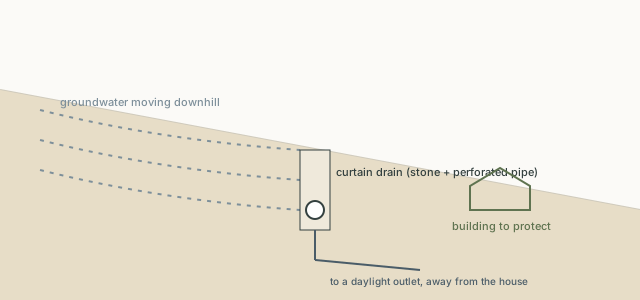
Buildings and drains change the numbers. A leachfield needs 20 feet to a foundation without a drain, and 75 feet when the foundation is downslope and has a footing drain. A curtain drain downslope of a field needs 75 feet, and one upslope needs 35 feet.
Trees, slopes over 30 percent and roadways carry their own distances. The Secretary of Natural Resources can authorize a reduction or require a larger distance for a specific site, so the designer must determine the distances required on the specific lot.
Why enforcement happens mainly through permitting, not inspection
Because the rules are primarily enforced by requiring an approved permit before construction, instead of through routine post-construction inspection, the system relies on the permit application and review process catching non-compliant designs before they're ever built, instead of catching problems after the fact. The review comes before the digging.
This is exactly why building without a permit is a serious compliance issue distinct from simply being an administrative oversight. A missing permit record does not establish what was reviewed or whether an historical exemption applies.
Investigate authorization, construction evidence and condition separately. A missing permit does not prove that no assessment occurred; establish the applicable authorization or exemption and available construction records.
How older systems relate to current rules
Existing systems need review against their applicable permit, use and exemption provisions. Obtain the original records. Age alone does not require replacement, but describing a system as grandfathered does not establish that its current use, condition or a proposed change is authorized.
A new activity must be checked against the current permit triggers and exemptions. Section 1-301(b) allows certain existing portions to be used under stated conditions, and variance provisions have their own tests. Do not assume either complete grandfathering or automatic replacement of every older component.
Check the whole isolation zone before placing a system
Measure from the component specified by the rule, rather than from an approximate mark for the system. Tank and leachfield distances differ. Include neighboring wells, surface water, property lines, foundations, drains and the replacement area when the designer maps the usable part of the lot.
The tables on this page give the rule distances and their source. A small lot still needs a site-specific design: groundwater direction, well type and a permitted reduction can change which distance applies. Do not scale a setback from a real estate listing.
Does an old septic system need to meet current Vermont rules?
Age alone does not determine the requirements. Older, correctly permitted systems have grandfathered status, though significant modification or replacement needs to meet current rules at that time.
What happens if my septic design doesn't meet Vermont's rules?
It simply won't receive an approved permit. The state's review process is specifically designed to catch and reject non-compliant designs before any construction can legally begin.
Are Vermont's septic sizing rules based on occupancy or bedrooms?
The residential calculation uses bedroom and design-occupancy assumptions, with proposed greater occupancy also considered. Section 1-803 and Table 8-1 govern. Current low household use is not proof of spare permitted capacity.
Can a town add its own septic requirements beyond state rules?
Section 1-103 supersedes municipal technical wastewater and potable-water standards, while allowing specified nontechnical local requirements, including general development setbacks and document submission. Check both without assuming a town can replace the statewide technical rules.
Does replacing an old septic system mean it has to meet new, stricter rules?
Have the designer apply the current rules, exemptions and any available variance provisions to the specific scope. Existing-component reuse is conditional; age alone does not determine it.
Who wrote and maintains Vermont's septic rules?
The state's Department of Environmental Conservation develops and maintains these rules, periodically updating them to reflect current understanding of wastewater treatment and public health protection.
Can I read Vermont's septic rules myself?
Yes, they're publicly available through the state's Department of Environmental Conservation, though the technical detail is dense enough that most homeowners rely on a licensed designer to interpret and apply them correctly.
Do commercial septic systems follow the same rules as residential ones?
Commercial systems follow related but sometimes distinct provisions within the same broader rules, often with different design flow calculations reflecting commercial use patterns instead of residential bedroom-based sizing.
How often does Vermont update its septic rules?
Updates happen periodically as the state's understanding of wastewater treatment evolves, though not on a fixed predictable schedule. A licensed designer stays current with whatever version is in effect for a given project.
ADUs and septic capacity
ADUs and septic capacity must be reviewed together: Vermont treats a detached accessory dwelling as its own living unit under the Wastewater System and Potable Water Supply Rules. An ADU attached to the house, such as converting a bedroom into a studio apartment, can sometimes qualify for an exemption, but the state's own fact sheet does not spell out a fixed test for when that applies. Have a licensed designer or the regional DEC engineer confirm how the requirements apply to the proposed unit.
A composting toilet is allowed in an ADU with a permit and can qualify for a component design-flow reduction under §1-803(g)(2), but it does not remove the permit requirement itself, since Vermont requires every unit's wastewater, not only toilet waste, to be managed. Have that finding documented for the proposed use.
What counts as an ADU under Vermont's rules
Vermont doesn't define "ADU" anywhere in the Wastewater System and Potable Water Supply Rules. It simply treats one as a living unit, the same category any house or apartment falls into. The proposed living arrangement determines the applicable unit category.
The state's own fact sheet lists what qualifies: an over-the-garage apartment, an in-law apartment, a basement apartment, a non-mobile RV, a yurt or yome, a cabin, a mobile home, a duplex unit, a tiny home or a cottage on the same lot as another dwelling. A living unit needs at least one bedroom, one bathroom and a kitchen, defined as a space with a sink designated for cooking. The list is broad.
A living unit is what triggers the rules, so adding one is treated the same way as adding any other dwelling: as an increase in wastewater and water flow. The state's guidance is blunt about why that matters.
A water supply or wastewater system engineered for one household cannot simply absorb a second one, and adding an ADU onto a system not designed for it can lead to expensive water-supply shortages and wastewater treatment failures that need separate assessment and permitted remedies. More people means more flow.
Detached ADUs almost always need their own review; attached ones sometimes don't
A detached ADU, a cottage, a converted garage, a yurt, a tiny home set apart from the main house, is its own structure with its own plumbing fixtures, so it reads as a straightforward new living unit and almost always needs a Wastewater System and Potable Water Supply Permit evaluating whether the property's existing capacity can serve it or whether the system needs to be enlarged. Detached units need their own review.
An ADU built inside or attached to the existing house, converting a bedroom to a studio apartment is the state's own example, can sometimes qualify for an exemption, but Vermont's fact sheet is careful not to promise one: it says only that "some exemptions may apply" and that a licensed designer or your regional engineer determines the specifics of your situation. Nothing in the published guidance lets a homeowner self-certify that an internal conversion is exempt. Ask before you build.
Short-term rental or occasional family use doesn't change the requirement
Planning to rent the ADU only during ski season, or use it only when relatives visit, does not exempt it. The state's guidance addresses this directly: a Wastewater System and Potable Water Supply Permit is still required, regardless of how lightly or occasionally the unit gets used.
The rules size a system to what it is capable of handling, not to how often an owner intends to use that capacity. Rare use does not change it.
That same logic, that intended use pattern doesn't decide whether a permit applies, shows up in other Vermont wastewater situations too, including converting a seasonally used camp to year-round living, which this site covers separately because the underlying test is different even though the reasoning behind it is the same.
What the permit process evaluates
Adding an ADU means the state looks at design flow the same way it does for an added bedroom: your existing system was sized for a specific number of bedrooms and a specific flow, and a new living unit adds to that number whether or not it happens to share a roof with the original house. If the existing system doesn't have the capacity, have the designer establish the necessary capacity change through the permit process before authorizing the additional unit.
A composting toilet doesn't get an ADU out of the permit process, but it changes the math inside it: Vermont allows composting toilets in an ADU with a permit, and using one can reduce the required leachfield size by 25 percent, since less liquid waste reaches the soil-based system. Any outdoor pump well, bottled water or rainwater collection setup does not satisfy the state's potable water requirement. Water has to be piped to the unit.
Can I add an ADU without upgrading my existing septic system?
Only if your existing system already has spare capacity for the added flow. The permit process evaluates that specifically, and a system without the capacity needs to be enlarged before the ADU can be approved.
Do I need a wastewater permit for an ADU I only rent short-term?
Yes. The state's guidance addresses this directly: intended use pattern, including short-term or occasional-only use, does not exempt an ADU from needing a permit.
Does a composting toilet let me skip the wastewater permit for an ADU?
No. A composting toilet still requires a permit, though it can reduce the required leachfield size by 25 percent since it removes toilet water from what the soil-based system has to handle.
Who decides whether my attached ADU qualifies for an exemption?
A Vermont-licensed wastewater designer or your regional DEC engineer, evaluating your specific situation. The published fact sheet does not set a fixed rule a homeowner can apply without that review.
Can my existing well and septic system just serve an ADU too?
Not automatically. Water supply and wastewater systems are engineered for a specific number of people. Adding a separate household onto a system not designed for it can cause expensive failures in both the well and the leachfield.
What happens if I build an ADU without getting a wastewater permit?
It creates the same problems any unpermitted wastewater work does. A compliance gap that surfaces at a future sale, financing or inspection, on top of the underlying risk to the water supply and wastewater system.
Does a detached tiny home or yurt on my property count as an ADU?
Yes. Vermont's fact sheet lists tiny homes, yurts and yomes among its examples of accessory dwelling units, provided the structure has at least a bedroom, bathroom and kitchen.
How much does a composting toilet reduce the required leachfield size?
Section 1-803(g)(2) allows a designer to reduce component design flow by 25 percent when it serves no more than four living units and every unit has only composting or incinerating toilets. This is not a blanket reduction of all physical dimensions; permitting still applies.
Is adding an ADU treated differently from a regular home addition?
Not fundamentally. Both are evaluated on whether they increase design flow. An ADU almost always does, since it adds a kitchen and bathroom serving a separate household, which is a clearer flow increase than most additions.
Can I provide water to an ADU with a rain barrel or bottled water instead of piping it?
No. The state requires a sufficient, piped water supply for personal hygiene and sanitation. Bring the existing supply records and proposed ADU use to the designer. Confirm the authorized potable supply before treating a toilet choice as the only permitting issue.
Camp to year-round conversion
Camp-to-year-round conversion in Vermont requires checking both the existing permit and the applicable exemption before changing occupancy. For a residence covered by the clean-slate exemption, §1-303(b) uses the historical 180-day test during the 1986–2006 window to distinguish year-round from seasonal use. That is not a universal rule that every newer residence must satisfy: a later permit can authorize year-round use.
A primitive camp has a separate definition and construction exemption with limits on occupancy, plumbing and other development on the lot. Start with the recorded permit, amendments and available use records, then ask the regional office or licensed designer which provision applies.
If conversion requires authorization, resolve water supply, design flow and wastewater capacity before occupying the building year-round. A working weekend system does not establish capacity for the proposed use, and a current property listing’s description does not substitute for the permit or applicable exemption.
Read the permit before applying the historic test
A permit may already authorize the intended occupancy or restrict it to seasonal use. For residences under §1-303’s clean-slate exemption, the historical-use provision applies within that exemption’s scope. Do not assume every house must independently prove occupancy before 2007.
Collect the permit, amendments and available town, utility and occupancy records. Ask which evidence the regional office needs.
Keep its determination with the property records. An online article cannot establish that one record is sufficient or that an owner’s account is categorically excluded.
Primitive camps have a separate, narrow exemption
The rule defines a primitive camp with occupancy no more than three consecutive weeks and no more than 60 days per calendar year, and no interior plumbing except one sink with water. A qualifying composting or incinerating toilet must not yield liquid and its contents must follow the disposal rule.
The construction exemption also restricts other development on the lot: it applies on a lot with no other buildings, structures or campground, or with a single-family residence but no other buildings, structures or campground. Meeting only the day count does not establish the whole exemption.
Resolve the proposed use before moving in
Have the designer compare the proposed use with the permit, design flow, water-supply capacity and site limits. Request a finding for the proposed occupancy.
Keep the approved use clear. The review may allow existing components or require changes; conversion does not automatically mean either a larger field or no work.
If an application is required, agree on the design and authorization sequence before construction or occupancy changes. Keep the written determination, approved plans and any operating restrictions with the property records.
Does every year-round home need evidence from before 2007?
No. The historical test belongs to the clean-slate exemption’s scope. A later permit may already authorize year-round use; check the actual records.
Is 60 days the only primitive-camp condition?
No. Consecutive occupancy, plumbing, toilet disposal and the other development on the lot are also restricted by the definition and exemption.
Can a flush toilet be added under the primitive-camp exemption?
A flush toilet does not fit the primitive-camp definition. Have the resulting use and water/wastewater systems reviewed before installation.
Will conversion require a new field?
That depends on authorized use, capacity, existing conditions and the applicable rules. Obtain the designer’s evaluation rather than assuming either replacement or reuse.
What records should I gather?
Start with permits and amendments, then available town, utility and historical-use records. Ask the regional office what it needs for the specific determination.
Does using a camp full time now establish the exemption?
Present occupancy does not rewrite the historical clean-slate test or remove permit conditions. Resolve authorization for the proposed use with the regional office.
What if the seller describes the camp as year-round but the permit is seasonal?
Treat that as a records question to resolve before relying on the proposed occupancy. Provide the permit, amendments and available historical-use evidence to the designer and regional office.
A real-estate description, winterized pipe or new heating equipment does not itself change wastewater authorization. Ask for the written determination applicable to the specific property and proposed use.
Can I separate winterization work from the occupancy decision?
Describe the physical alterations and intended use together when requesting review. Insulating a building, adding plumbing and increasing occupancy can raise different questions, even within one project.
The wastewater review must address the actual water supply and discharge, not only whether the building is comfortable in winter. Keep any conditions attached to the determination with the construction records.
| Document | Establishes | Does not establish |
|---|---|---|
| Issued permit | Approved project and conditions | As-built compliance alone |
| Exemption determination | Applicable conditions for the described work | Permission for a different later use |
| Certification or amendment | Documented follow-up scope | A blanket future exemption |
Read the issued authorization and its conditions rather than relying only on the document title.
| Item | Explanation |
|---|---|
| Search the public state permit records | Use the property, owner and available permit identifiers; distinguish the permit from construction certification. |
| Check the state's regional DEC office | Ask the regional office or town for available supporting records if the online record is incomplete. |
| Expect thinner records for older systems | Record-keeping has evolved over decades of state regulation. |
| Arrange a current site evaluation if the search fails | Assess the installed system and use, while documenting records that remain unverified. |
| Do this during due diligence, if buying | Preserves negotiating position before the purchase closes. |
Standard search sequence for locating an existing wastewater permit in Vermont.
| Situation | Review to establish |
|---|---|
| New septic system installation | Applicable authorization or specific exemption under the current rules |
| Replacing a failed system | Approved replacement scope and any required permit/amendment |
| Adding bedrooms | Proposed design flow and the existing authorized capacity |
| Significant repair beyond routine maintenance | Whether the scope qualifies as maintenance/minor repair or requires authorization |
| Converting seasonal camp to year-round use | Actual historical use, existing authorization and the applicable conversion provisions |
| Routine pumping and maintenance | Routine service is distinct from a modification; clarify any additional work |
General guidance on situations triggering Vermont wastewater permit requirements; consult your regional DEC office for a specific project.
| Category | What it establishes |
|---|---|
| Sizing formulas | Authorized design-flow method, tank capacity and system-specific sizing |
| Soil requirements | Soil application rates and depth to limiting layers |
| Setback distances | Minimum distances from wells, water bodies, structures |
| Construction standards | Requirements for tanks, distribution boxes, leachfields |
General overview of the categories addressed by Vermont's wastewater system rules.
| Feature | Septic tank (outside edge) | Leachfield (edge of stone) |
|---|---|---|
| Property line | 10 | 25 |
| Surface water at normal high water | 25 | 50 |
| Foundation without a drain | 10 | 20 |
| Foundation with a footing drain, downslope of the field | 10 | 75 |
| Curtain drain downslope of the field | 10 | 75 |
| Curtain drain upslope of the field | 10 | 35 |
| Roadway, driveway or parking lot | 5 | 10 |
| Slope steeper than 30 percent | 10 | 25 |
| Water service line under pressure | 25 | 25 |
Vermont Wastewater System and Potable Water Supply Rules, section 1-912, Table 9-3, November 6, 2023 edition, with 2024 corrections. The Secretary can reduce or increase a distance for a site; ask the designer which edition applies to your permit.
| Proposal | What to establish | Design implication |
|---|---|---|
| Detached living unit | Applicable authorization and proposed use | Calculate the unit and shared components under the approved method |
| Attached/internal living unit | Whether a specific exemption applies to the actual change | Existing room names do not establish permitted capacity |
| Only composting or incinerating toilets in qualifying units | §1-803(g)(2):component serving no more than four living units | A conditional 25%component design-flow reduction, not automatic 25%reduction of every field dimension |
| Occasional or rental use | Actual use, authorized occupancy and applicable requirements | Short stays alone do not establish an exemption |
Vermont wastewater rules §1-803(g)(2), corrected 2023 edition; the specific project and exemption conditions still need review.
| Record or provision | What to establish |
|---|---|
| Existing permit and amendments | Authorized occupancy and design flow |
| Clean-slate historical use | Whether §1-303 applies and how use was classified |
| Primitive-camp definition and exemption | Occupancy, plumbing and lot-development conditions |
| Proposed conversion | Required review, system capacity and authorization |
Vermont wastewater rules §1-201(75), §1-303 and §1-304(3). Each provision has its own scope and conditions.
Vermont septic permits: authorization, design flow and records
How do I find my property's existing septic permit?+
Check with your town clerk or the state's regional Department of Environmental Conservation office, both of which may have the original permit and design on file.
How long does it take to get a Vermont wastewater permit?+
A few weeks, depending on the regional office's workload and design complexity. The design and soil testing process guide covers the full timeline in more detail.
Can I install a septic system without a permit in Vermont?+
No. Installing a septic system without a permit is illegal and creates serious problems if the property is ever sold, financed, or inspected, in addition to the underlying public health risk.
Who applies for the wastewater permit: me or my contractor?+
Your licensed septic designer prepares and submits the application as part of the design process, though the homeowner is the ultimate applicant and permit holder of record.
Does a Vermont wastewater permit expire?+
Read the actual issued permit, amendments and approved use with the regional office. Do not assume a generic construction-expiration window. A change of design, use or site conditions can require review even when the old permit remains on record.
What information is on a Vermont septic permit?+
Tank size and type, field size and location, setback compliance, and the bedroom count the system is designed for. It records what was approved. Construction certification and inspection records document the installed system.
Can I transfer a septic permit to a new owner when I sell my house?+
The permit is tied to the property and its approved system design rather than needing an active transfer process, though buyers should confirm the on-file permit matches the current, actual system.
Does every septic-related project need a new permit?+
Not every project. Routine maintenance like pumping doesn't require one, but new construction, replacement, and significant modifications or bedroom-count changes do.
What happens if I can't find my property's original permit?+
A licensed designer or the state's regional office can sometimes help locate historical records. If truly unavailable, a current site evaluation may be needed to confirm the existing system's actual capacity and condition.