Well running low in late summer
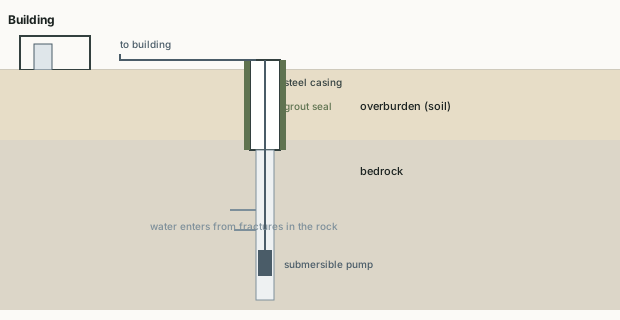
A well running low in Vermont’s dry late summer needs a supply and equipment assessment before you decide what work to request. A drought lowers the groundwater that feeds a well, and a drilled well in bedrock depends on cracks in the rock that hold only so much water. Dug and shallow wells drop first.
Sputtering faucets, weak pressure, rapid cycling and cloudy or sandy water can accompany low available water, but the service provider also has to check the pump, controls, pressure tank and possible leakage before treating drought as the cause. Cut demand at once by spreading out laundry, fixing running toilets and pausing lawn watering. Do not let the pump run dry, since that can ruin it.
Call a well professional to measure the water level and the well's yield. Deepening the well, hydrofracturing and adding a storage tank are the usual longer-term answers. Test the water once the supply recovers, as low water and returning flow can change its quality.
| Sign | What to assess | First step |
|---|---|---|
| Sputtering faucets | Water delivery, air entry and available water | Cut demand and call a well professional |
| Pressure fades in the shower | Demand, pump/control performance, leakage and available water | Reduce unnecessary use while arranging assessment |
| Pump cycles often | Pressure tank or water level problem | Have the system checked |
| Cloudy or sandy water | Source changes, sediment, equipment and water quality | Stop heavy use and call for help |
| Running toilet or dripping fixture | Waste of limited supply | Address the leak promptly |
| Well recovers slowly overnight | Measured production and recovery under relevant conditions | Ask how the actual supply and demand were measured before selecting work |
A planning summary for Vermont well owners in a dry season, meant to prepare a call to a well professional. A measured yield test is the real guide.
Why a well drops in a dry spell
A well is a hole that reaches groundwater, and groundwater rises and falls with the season, so late summer is the low point in a dry year until rain and snowmelt refill the supply in fall and spring.
How far a well drops depends on its type. A dug well draws from shallow water and falls fast. A drilled well reaches deeper, and a low-yield bedrock well can still be drawn down faster than it recovers.
Signs that the supply is running low
Sputtering at the tap is the classic sign. Pressure that fades during a shower or laundry is another. Rapid cycling can also come from the pressure tank, switch or a leak; it does not establish drought as the cause.
Cloudy or sandy water can accompany changing water levels or other well and equipment problems; the appearance alone does not identify the source. Do not ignore it, since sediment can also clog fixtures, aerators and treatment equipment.
Assess actual production, recovery, demand and equipment. Depth, source type and season alone cannot establish whether the supply will meet demand.
What to do first, and what to do next
Start with the household. Space out laundry and showers, fix any running toilet and stop watering the lawn, since even a short pause gives the well time to recover between the demands that pull it down.
Give the service company the duration of the problem, recent water use and any available well log or earlier test. Ask it to record the test conditions, findings and limits of the assessment in the proposal.
If dry-season problems recur, compare the measured supply and household demand before selecting storage, rehabilitation or a new source. Obtain a complete proposal for the identified problem; no general cost ranking establishes which approach suits this well.
Protect the pump and use a safe temporary supply
Vermont Health advises turning off a dedicated well-pump circuit when the well is out of water to avoid dry-running damage. Do not open electrical controls or repeatedly reset a tripping breaker. Contact a qualified professional to diagnose the supply and equipment.
Use a known safe source for drinking and cooking until testing supports reuse. If delivered water is needed, use a suitable potable storage tank; do not pour hauled water into the well or spring box. Health warns that it can escape, damage the supply or contaminate groundwater.
Well running low in late summer: recovery, demand and low-supply assessment
Can a drilled well really go dry in Vermont?+
It can drop low enough to lose water in a long dry spell. A deep drilled well in good rock is more secure than a shallow one. Yield and depth decide the risk.
How do I know if my well is running low or my pump is failing?+
Low water and a failing pump look alike at the tap. A well professional can measure the water level and the pump's output. Guessing can cost you a good pump or a needless well repair.
Should I stop watering my lawn during a dry spell?+
Yes, if the well is showing signs of strain. Outdoor watering is the largest single draw on many wells. A pause protects the supply for drinking and washing.
Will running the pump dry ruin it?+
It can. A submersible pump depends on water around it for cooling. Repeated dry runs shorten its life.
Why is my water cloudy in August?+
A falling water level can stir sediment or change the groundwater entering the well, but other defects can produce similar symptoms. Use a known safe drinking source and arrange evaluation and testing.
How does hydrofracturing raise a well's output?+
It is a way to raise the yield of a bedrock well by opening the cracks that feed it. A driller injects water at high pressure to widen them. The result depends on the rock.
How does a storage tank help a low-yield well?+
The well fills the tank slowly through the day and night, and the house draws from the tank at peak times. That evens out demand. It suits wells that recover slowly.
Can I deepen my well?+
Often, yes. A driller extends the hole to reach more water, and the cost rises with depth. Ask for a plan that names the expected gain.
Should I test the water after a dry spell?+
Yes, once supply returns to normal. Low water and returning flow can change what is in the well. Test for bacteria and ask about a broader panel.
How much water should a household save during a drought?+
Cut every use you can and skip the lawn. A short shower, a full dishwasher load and repaired leaks add up. The goal is to reduce peak use that pulls the well down.
When should I call a well professional?+
Call at the first sputtering or cloudy water, and before the well goes dry. Early calls cost less than emergency ones. A driller in a dry August is busy.