Replacing a well pump
Replacing a well pump should follow diagnosis of the pump, controls, piping and available water. Constant running without pressure can also result from a leak or low water level. It does not prove the pump itself has failed.
Ask for the measured fault and the proposed pump’s performance at your well’s pumping level and delivery pressure. A submersible replacement requires lifting the pump and supported pipe and wiring from the casing with equipment suited to their weight and depth. Existing pipe, cable and the pressure tank should be inspected, not automatically discarded or reused.
Pump model, lift work, electrical repairs, materials, disinfection and return-to-service checks are distinct replacement costs. Compare that complete scope with the repair option. A larger motor does not create more well yield, and choosing by horsepower alone can produce a poor match to the water source and household demand.
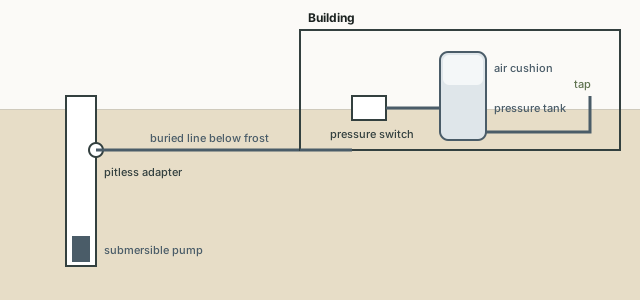
Ask for evidence before authorizing replacement
Have the technician distinguish supply voltage, controls, cable condition, pump performance and well recovery. A pressure tank fault may cause rapid cycling without requiring a new pump. A leaking buried line can prevent pressure from building even when the pump runs.
Request the diagnosis in the estimate. When the pump is removed, ask which observed condition supports replacement and whether the cause of failure has been addressed.
| Item | Ask for |
|---|---|
| Pump selection | Model and performance at required lift, pressure and flow |
| Existing equipment | Condition of cable, pipe, tank and controls |
| Installation | Lift equipment, access and material scope |
| Return to service | Pressure, delivery and water-quality checks |
Manufacturer model selection, troubleshooting and tank installation instructions.
Compare performance at the actual duty point
Pump selection needs lift, pressure, flow demand and available yield. Identify the proposed Goulds model.
Read its performance curve and installation instructions. A generic horsepower rule cannot select equipment for the actual duty.
Ask whether the new pump, pressure switch, pressure tank and any controller are compatible. Tank precharge is checked with water pressure relieved, following the tank manufacturer’s instructions.
Separate the parts of the quote
Pump model, lifting equipment, labor, drop pipe, cable, controls and building connection work contribute separately to the replacement price. Inspection findings can reveal additional components needing replacement.
Ask how the well will be protected from contamination while open, what disinfection or testing is included and how pressure and delivery will be checked before service is complete. Depth alone cannot establish the final installed price.
What a pump replacement includes
A pump that runs without building adequate pressure needs checks of its delivery, the water level, piping and controls. Confirming that the tank and switch work does not by itself exclude a leaking line or inadequate supply.
Persistent grinding noise needs investigation of the pump and associated equipment. Noise location and changes during a draw help distinguish a flow-related sound from an equipment fault; sound alone establishes neither bearing failure nor replacement price.
Use the well completion report and available installation records to distinguish the borehole depth from the pump setting before comparing an estimate. Ask which drop-pipe and cable lengths are included and what inspection would justify replacement or reuse. The lifting plan needs access to the casing; tell the provider about snow, ice and the route for its equipment so a winter visit can be planned for the actual site.
A submersible pump hangs in the casing on connected pipe and wiring, so retrieval involves supporting those components as the pump is raised. The required rig or lifting method depends on the installed depth, material and weight. Confirm that the selected well contractor can handle that arrangement, protect the open supply and reconnect the electrical and pressure equipment under the applicable instructions.
Once pulled, the old pump is disconnected and the new one attached to fresh pipe and wiring as needed, then lowered back into the well and reconnected to the house's pressure system, with the completion time depending on the depth, access, condition of the retrieved components and required testing.
Replacement cost depends on well depth , a deeper well requires more pipe, wire and pull time, along with the pump's size and horsepower rating, matched to the household's water demand and the well's characteristics. Get a quote specific to your well rather than relying on a generic estimate.
Look for pressure that never builds despite a healthy tank and switch, persistent grinding noise, or a pump that has simply stopped running with power and the switch both confirmed good.
Cost varies with well depth, pump size and access, so a total without those details cannot be compared reliably. A priced item differs from an allowance; additional work can change the total.
Ask for a schedule covering retrieval, installation, reconnection and water-quality work; a fixed same-day promise cannot cover every depth or access condition.
Replacing a well pump: service details and questions
Ask whether the unit runs constantly without building pressure, makes grinding noises consistent with worn bearings, has stopped running despite confirmed power and a good pressure switch, or has reached an age where a professional judges it more cost-effective to replace than keep repairing. Replacing a submersible pump means pulling the entire pump and its attached pipe up out of the well casing, using suitable lifting equipment, then installing the selected pump, pipe and wiring before lowering it back down and reconnecting the system.
Cost varies with well depth, pump size and access. A total without an identified scope cannot establish a precise replacement price for this well.
A well-pump replacement should follow findings that distinguish the pump from the tank, switch, wiring, delivery pipe and available source. Continuous running without pressure, grinding, or failure to start are observations to investigate; none alone proves irreparable internal damage. Retrieving a submersible unit involves raising the connected pipe and cable with support suited to the depth and weight, then checking which materials can remain.
Selected equipment and operating duty, included pipe lengths, lifting work and additional findings affect the replacement total. The national pump guide mentions 10 to 15 years in its general discussion of pump replacement. That is a planning reference, not this pump’s predicted lifetime or a reason to replace a working unit without assessment.
The pump sits down the well on its pipe, so replacing it means pulling the whole assembly
Signs a well pump needs replacement, not repair
Runs constantly, no pressure builds
Even with a confirmed healthy tank and switch
Persistent, worsening grinding noise
Investigate internal wear alongside the rest of the assembly; sound alone cannot establish whether repair is economic
Pump has simply stopped, power and switch confirmed good
Check the motor and cable as well as the confirmed supply and control; identify the measured fault
Age and repair history
A well contractor can judge when repair no longer makes sense
Reported signs to investigate before distinguishing repair from replacement
Establish the fault before selecting the remedy
A pump that runs continuously without ever building adequate pressure, despite a healthy pressure tank and switch, may no longer be able to move water efficiently. The cause is not necessarily inside the unit itself: a leaking delivery line or inadequate source can still be involved.
A pump that runs continuously without building adequate pressure needs its delivered flow, piping, source level and controls assessed together. Even with a healthy tank and switch, a leaking line or inadequate water can prevent the expected result. Ask the findings to separate those conditions from an actual pump-performance fault before authorizing retrieval or a new unit.
Persistent grinding noise while running, especially if it develops gradually and worsens over time, can indicate worn internal components like bearings. Whether these can be economically repaired in place and whether the pump is nearing the end of its service life need findings from the equipment, not the sound alone.
Report where the grinding sound occurs. Internal wear or debris may need investigation, but a remote sound is not a bearing inspection or an economic repair decision. Ask what additional examination is possible and how retrieval, repair and replacement alternatives will be priced before assuming the whole unit has reached its end.
What a pump replacement costs, by depth
Separate the submersible pump itself from the work needed to lift the existing assembly and return the supply to service. The estimate should identify pipe, wire, controls, connections and testing, plus access or electrical repairs that are outside the replacement. Depth changes the required pipe, wire, lifting and pump specification; ask for those actual quantities and access costs instead of multiplying depth by an assumed price increment.
Plan for the drop pipe and wire to be inspected with the pump, and for the rig or hoist to need clear access. A cold-weather pull is possible, but frozen ground and deep snow around the casing can affect access and time. A specialized truck-mounted well service rig designed to handle the pipe, wiring and pump weight may suit the installation; the contractor must confirm the method for the actual depth and supported assembly.
The actual installation records determine the lifting and material allowances; a Vermont address does not establish a deep pump setting. Have the quote state pipe and cable quantities. Identify what the contractor will inspect.
Agree on the conditions for reuse or replacement. Winter access to the casing, ground conditions and clearance affect seasonal removal work.
How the physical replacement works
Once pulled, the old pump is disconnected and the new one attached to fresh pipe and wiring as needed, then lowered back into the well and reconnected to the house's pressure system. Ask about the time from pulling the old pump out of the casing to installing and reconnecting the new one; testing and discovered damage may extend the visit.
Once supported and raised, the old unit can be disconnected for inspection and the selected replacement connected with serviceable or new pipe and cable as the findings require. The assembly is then lowered, secured and reconnected. Agree on the lifting, installation, electrical checks and return-to-service sequence; a straightforward physical pull does not establish when water-quality work will be complete.
What to expect on cost and lifespan
A correctly sized, quality pump installed correctly still needs assessment of its actual use and condition. The expense can be infrequent instead of an ongoing maintenance line item, but no particular service life or number of replacements over homeownership is guaranteed. Keep age and repair history as evidence for the comparison.
Keep the pump’s installation date, model and repair history. File the measured delivery results alongside those records.
Those records help compare the next proposed repair with replacement. The published 10-to-15-year reference is not a warranty or a failure date; use the actual condition, duty and related work to assess the financial choice rather than treating age as proof of failure.
Well pump replacement work to identify
Pump replacement: compare the selected pump, lifting, pipe, wire, controls and return-to-service checks as separate parts of the installed scope
Pump, materials and labor for the actual well depth
Added pipe, wire and lifting requirements with increased depth
Pump specification, depth, lifting access and the included installation work determine what must be quoted
Pump replacement: equipment, lifting and installation scope
; Pump diagnosis and quantity comparison
How do I know if my well pump needs to be replaced? / How much does it cost to replace a well pump in Vermont?
The proposal needs the recorded depth, selected pump, access and included pipe or wire quantities; a broad price category does not identify that work. A priced item differs from an allowance; additional work can change the total
How long does it take to replace a well pump?
Ask for the expected retrieval and installation time. Request the electrical diagnosis and reconnection schedule separately. Include the timing of water-quality checks.
Access, depth and discovered damage can change those stages. Confirm how the company will communicate a delay and what findings establish that the system is ready for its intended use; a one-day promise cannot cover every installation.
How long do new well pumps last?
A quality submersible pump, correctly installed, commonly lasts 10 to 15 years in the national pump service-life guide, making replacement an expense to plan for after condition assessment for most homeowners instead of a recurring cost
If your household's water demand or fixture count has increased since the original pump was sized, have that change assessed. A well contractor can recommend the right size for your current needs after checking the source and delivery requirements; a larger pump does not create more available water.
Changed fixtures or household demand affect the required pump duty, while measured well supply limits available water. More horsepower alone cannot fix limited yield. Ask which tank, controls and pipework the selected operating duty requires before approving an equipment upgrade.
For a pump nearing or past its typical service life showing genuine failure, compare the full costs of repair and replacement. A contractor's assessment of your specific pump's condition is the best guide; age alone does not establish which is more cost-effective.
Compare the actual repair findings with the replacement proposal, including retrieval, parts, reconnection and remaining investigation. A unit’s age can inform that discussion without establishing that replacement is cheaper. Ask which fault the priced remedy addresses and what would remain unresolved after the work.
Does well pump replacement require a permit in Vermont?
Pump replacement does not necessarily change the well's structure, though check the applicable requirements for your specific situation. Do not infer that no separate permit is needed just from the name of the component being replaced.
Have the proposed work checked against Vermont’s minor-repair provisions and the existing water-supply approval. An in-kind component repair and a change in use, design flow or source are different scopes. Ask the responsible designer or state program which review applies before treating every pump-related project as exempt.
Often yes, if the existing tank is in good condition and appropriately sized, though it's worth having a contractor evaluate the tank's condition at the same time, since an aging tank may benefit from replacement too
A well pump needs replacement, instead of a fix to the tank or switch, when the findings establish that replacement is needed. Report whether it runs constantly without building pressure, makes grinding noises consistent with worn bearings, has stopped running despite confirmed power and a good pressure switch, or has reached an age where a professional judges it more cost-effective to replace than keep repairing. The observations must be assessed with the pipework and source; they are not individually conclusive signs of internal failure.
A submersible pump sits down in the well casing attached to a length of pipe and wiring, so replacement requires pulling the entire assembly out. One possible method uses a specialized truck-mounted well service rig that can handle the depth and weight involved.
Support equipment depends on the installed pump and removal arrangement. This job needs a professional well contractor with the required capabilities; a job title alone does not establish that capability.
Plan for the drop pipe and wire to be replaced with the pump when inspection establishes that they need replacement, and for the rig or hoist to need clear access. A cold-weather pull is possible, but frozen ground and deep snow around the casing add time where they must be cleared or worked around. The property record, not a statewide assumption about depth, establishes the quantities to include in the quote.
A quality submersible pump, correctly installed, still requires evaluation of its duty and condition. The national pump guide gives 10 to 15 years as a national service-life reference.
That does not mean most homeowners will replace a pump only once or twice over the life of owning a property. It is a significant expense to plan for instead of assuming either a fixed recurring cost or a once-in-a-generation event.
Ask about the sequence from pulling the old pump out of the casing to installing and reconnecting the new one. A straightforward job may have a shorter physical installation stage, but the whole visit cannot be promised as completed in a single day before access, faults and testing are known. Keep the schedule for those stages separate from the price method for additional findings.
For an in-kind repair confirmed to qualify under the applicable minor-repair provisions, the review requirements differ from a change to the supply. Check with the responsible program or designer if you're unsure for your specific situation. The statement that no separate permit is needed just for pump replacement is not a blanket exemption for changes in use, design flow or source.
Questions on Replacing a well pump
Can I replace a well pump myself?
It's not a typical DIY job. Pulling a submersible pump requires specialized equipment able to handle well depth and weight, so this work is done by a professional well contractor.
What equipment is used to pull a well pump?
Ask which rig or hoist the contractor proposes for the installed pipe, cable, pump depth and supported weight. Casing access and obstacles affect equipment positioning. The equipment must suit this assembly; a truck-mounted rig is a possible method, not proof that every retrieval uses the same machine.
Does a deeper well cost more to replace the pump in?
Yes. A deeper well requires more pipe, wire and pull time, which increases the cost compared to a shallower well of the same pump size and type.
Can I upgrade to a bigger pump when replacing mine?
Check the proposed change against measured production and recovery before increasing withdrawal. Added fixtures can change demand without increasing groundwater supply. Operating duty, control compatibility and storage capacity remain separate from motor size; a larger motor does not establish the source’s yield.
What size well pump do I need?
Sizing depends on well depth, yield, and household water demand. A well contractor evaluates these factors together to recommend the right horsepower and capacity for your specific situation.
Is it worth repairing an old well pump instead of replacing it?
For a pump nearing or past its typical service life showing genuine failure, compare the diagnosed repair with replacement, including retrieval and related components, though a contractor's assessment of your specific pump's condition is the best guide.
Can I use the same pressure tank with a new well pump?
Often yes, if the existing tank is in good condition and appropriately sized, though it's worth having a contractor evaluate the tank's condition at the same time, since the tank must suit the replacement pump and intended control arrangement.
| Replacement item | Information to obtain |
|---|---|
| Pump selection | Exact model, performance requirements and compatibility |
| Installation quantities | Pipe, wire, lifting access and connection work |
| Return to service | Electrical and operating checks included in the proposal |
Items to identify in the property-specific written proposal; no market-price estimate.
| Work item | Parts and labor to identify | Acceptance question |
|---|---|---|
| Pump removal and replacement | Lifting, new pump, pipe, wire and connection labor | Which quantities and access conditions does the estimate assume? |
| Pressure-switch repair | Diagnosis, compatible switch, connections and settings | Does the price include the visit, installation and operating check? |
Items to identify in the property-specific written proposal; no market-price estimate.
Replacing a well pump: pump duty and replacement scope
Does constant running mean the pump is worn out?
Not by itself. A leak, low water level, controls or pump condition can cause failure to build pressure.
Can I select a replacement well pump by horsepower alone?
No. Compare the pump’s performance curve with the required lift, delivery pressure, demand and measured well yield. Ask the proposal to state that duty so a larger motor is not mistaken for a complete design.
Must the pressure tank be replaced too?
Replacement depends on the tank’s measured condition and compatibility with the selected pump and controls. A retained pressure tank must meet the replacement installation’s operating requirements.
Will a bigger pump fix low well yield?
A bigger pump does not create groundwater. Have the well’s production and recovery assessed against household demand before selecting a higher withdrawal rate, storage or work on the source.
Which details make well-pump replacement quotes comparable?
Compare the same pump duty, pipe and wiring, lifting work, controls, disinfection and completion checks. Additional findings during removal can change the included work and final price.
Is all pump work exempt from review?
Check the proposed scope against Vermont’s minor-repair provisions. Changes to use, design flow or the supply can require review beyond an in-kind component repair.
Which records should identify the installed replacement well pump?
Request the exact pump and controller models, the stated operating duty, retained or replaced cable and pipe, and the completion-test findings. A later technician should be able to distinguish the new equipment from the unit shown on an older invoice without relying on a broad description such as a larger pump.
What if the removed pump is damaged but the cause is uncertain?
Observed damage can require further checks of the supply, controls and wiring. Replacing a visibly damaged unit may restore delivery while leaving a contributing fault unresolved. Separate the immediate equipment decision from the explanation of why it failed, and agree on any outstanding investigation before treating the repair as complete.